Real Honey vs Adulterated Honey: What UK Consumers Should Know
Honey is a popular natural sweetener in the UK, enjoyed in everything from breakfast foods and baking to hot drinks. However, there can be significant differences between genuine honey and products that have been diluted or mixed with other sweeteners. Understanding the difference can help consumers make more informed choices when buying honey.
What makes real honey different?
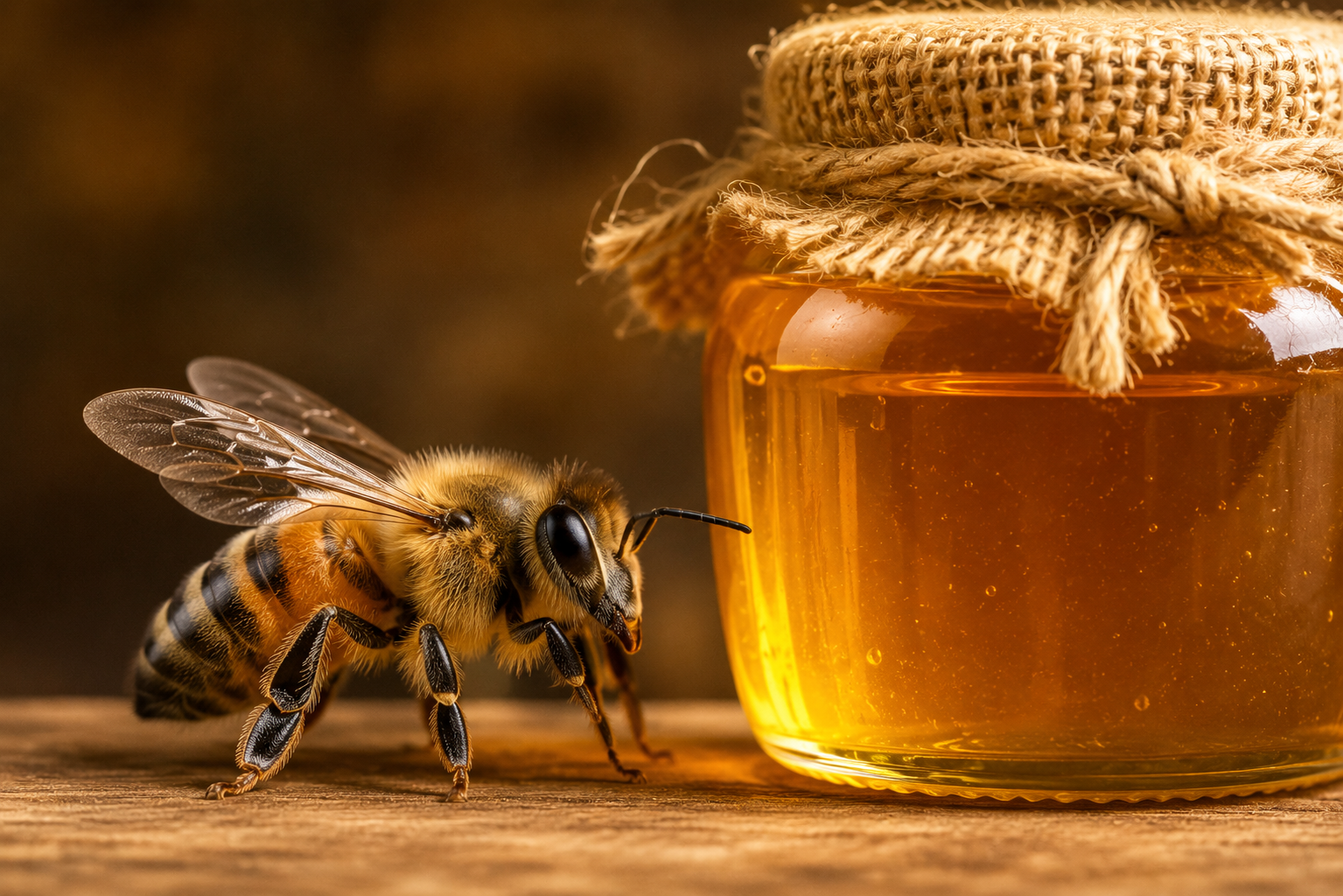
Genuine honey is produced by honey bees from nectar collected from flowers. Once processed by the bees, it becomes a naturally sweet food with its own combination of flavours, aromas, colours and textures. These characteristics can vary depending on the plants the bees have visited, the season and where the honey was produced.
Real honey can also contain naturally occurring compounds such as enzymes and other minor components that contribute to its distinctive characteristics. However, honey should not be viewed as a medicine or as a substitute for a balanced diet.
Another important benefit is traceability. When honey has a clear and trustworthy source, consumers have greater confidence that they are purchasing the food described on the label. Buying from established beekeepers or reputable suppliers can also help support the UK’s beekeeping industry.
What is adulterated honey?
Honey adulteration occurs when other substances are added to honey without being properly declared. One of the main concerns is the addition of inexpensive sugar syrups, which can allow a product to be sold at a lower cost while still being presented as honey.
The issue is particularly important because consumers may believe they are purchasing pure honey when the product has actually been altered. This can undermine confidence in the honey industry and create unfair competition for beekeepers and producers who sell genuine honey.
The UK Food Standards Agency has highlighted honey as a food that can be susceptible to fraud because of the value of the product and the complexity of international supply chains.
Why authenticity matters
For consumers, honey authenticity is about more than taste. It is about knowing that the product inside the jar matches what is stated on the label.
Genuine honey can have considerable natural variation. It may crystallise, change colour or have a different consistency depending on its floral source and storage conditions. These changes do not automatically mean that honey is fake or poor quality.
Equally, simple home methods based on water, matches, bread or other traditional “honey tests” cannot reliably prove whether honey has been adulterated. Scientific analysis and supply-chain information are much more dependable ways of assessing authenticity.
Choosing honey in the UK
Consumers can take a few sensible steps when purchasing honey. Check the label for information about its origin and the business responsible for the product. Choosing honey from a reputable producer can provide greater confidence about where it came from and how it was handled.
Local honey purchased directly from a known beekeeper can also offer useful information about provenance, although buying locally is not, by itself, a scientific guarantee of authenticity.
It is also important to remember that honey sold legally in the UK must meet relevant requirements for composition and labelling. Authorities continue to work on improved methods for detecting fraudulent honey and protecting consumers.
The bottom line
Real honey is a naturally produced food with distinctive characteristics that reflect its floral and geographical origins. Adulteration, particularly the undisclosed addition of cheaper sugar syrups, can mislead consumers and disadvantage genuine producers.
For UK shoppers, paying attention to provenance, labelling and the reputation of the supplier is a sensible way to make informed choices. Ultimately, greater transparency throughout the honey supply chain benefits both consumers and honest beekeepers.