Month: September 2020

October 2020 Apiary Notes

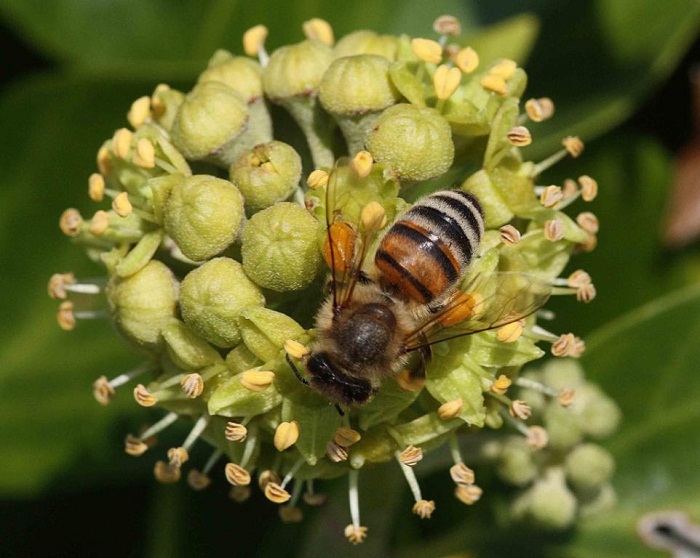
Now we are into October the weather has turned more autumnal although the bees are working the ivy during sunny spells. In fact some hives are working as if there is summer flow so they have a super to collect this last bout of activity. The presence of a super prevents the brood nest from becoming congested with stores and allows the queen to continue laying, albeit at a lesser rate.

Feeding should be about finished by now. Bees are reluctant to take stores down If the weather turns cold so, if some colonies need topping up it is better to do it sooner rather than later.

If your varroa treatment was Apistan or Apivar make sure the strips are removed after the treatment time – leaving them in all winter provides a lower level of dosage which can then lead to some mites developing resistance to the product. So to ensure these treatments remain effective for future years we need to take them from the hive soon.

The next job on my list before winter is to place mouseguards over entrances although I normally wait for the first frost before doing so. Mouseguards can knock off pollen loads from incoming foragers and pollen is vital for colonies while brood is being produced. Do tap the brood box before putting mouseguards in place – otherwise you could be trapping mice in the hive for winter!

The last job before winter is to wrap hives with wire netting to prevent woodpeckers damaging brood boxes. I am in the process of moving netting to apiary sites in readiness for this tedious job. If the winter is mild we can get away without nets but if there is a cold snap woodpeckers can do a lot of damage in a short time. Trying to put netting in place in bad weather is not high on my list ‘nice’ jobs so I prefer to do it in benign conditions. That way I know colonies are pretty safe until springtime.

Finally, just to let you know about the Facebook chat group set up by Steve Gale earlier in the year. This group is private, i.e. only available to Beds BKA members – the public cannot access it. You can apply to join the Chat Page group here.

This Facebook group is not run by the Association but by members. Anyone can post items of interest on there, for example ask a question about processing wax, anyone have some spare MAQS pads?, photos of what went well (or not). Topical items, e.g. I posted photos the other day of feed buckets washed in a Burco. Just a prompt to show what is happening around now.

One member posted recently that although he has been a member for over 30 years, as he lives on the edge of the county he does not often attend Association events. He said ‘I feel I am part of Beds BKA now that I can post items and see what others are saying’.

If you would like to join the group please contact Steve and, as long as you are a member, he will add you to the group.

Regards,
Wally
September 2020 Apiary Notes

Now we are approaching September we need to consider feeding our bees to ensure they have enough stores to last till next spring. Also varroa treatments should be complete by now or well under way. If Apistan or Apivar were used they should be removed after 6/8 weeks and that should be in this month. This is all part of preparing bees for winter.

Before I feed my colonies I like to check that each one looks viable. A quick inspection is made to ensure there is a laying queen and she has a good size nest. If the colony looks weaker compared to other colonies then it is worth considering uniting weak ones as long as there are no signs of disease. Chalk brood is very easy to identify whereas other brood diseases are less so. Any colony with bad chalk brood is culled this time of year as it is too late to rectify the situation. This is the last opportunity to inspect bees for six months so it is important they are in as good a state as possible.

Those colonies that look viable I feed as quickly as possible and I use Ambrosia. Syrup made from white granulated sugar is fine but it should be as strong a solution as possible, that is two parts sugar to one part water. Recently I have bought English tray feeders as the lids on contact feeders break down after a few years. Hopefully the tray feeders will last a lot longer.

If a colony was artificially swarmed earlier in the year check that all the frames with foundation have been drawn. If there are one or two frames undrawn by the walls bees sometimes leave these alone when being fed. Bring the frames into the edge of the nest which encourages bees to draw them when being fed. The sooner this is done the better as bees are less inclined to draw comb the further we move into autumn. If some frames are not drawn it means bees will not have enough space for the stores you intend to feed.

It is important to continuously feed a colony until it has enough stores; around 45lbs or 22kgs. If there is a break in feeding some of the stores will be turned into brood which means they will not have as many stores as you might think. But don’t overfeed as bees will fill cells where bees have emerged and thereby prevent the queen laying as many eggs she needs to produce the winter workforce. If feeding takes place too late in the year the outside temperature may be low and bees form a cluster. They don’t process syrup properly in these conditions and may leave the water content too high which can result with stores fermenting. This can cause dysentery in the hive and loss of bees.

When feeding bees all colonies in the apiary should be fed at the same time as bees become excited by the sudden input of food. If syrup is spilt or frames with honey are left open It can trigger robbing. An eke should be placed over the crown board around the feeder so the roof can be replaced. In fact I cover the feed holes with the feeder in order to prevent robbers gaining access through any gaps under the roof.

My aim is finish feeding by the end of September and hopefully before the ivy starts to flower. Some apiary sites have an abundant source of ivy in the autumn. Over the years I have found that bees that have collected a lot of ivy honey can have problems during winter, mainly with dysentery. So to avoid too much ivy being stored in the brood box I aim to finish feeding by end of September. A super is then returned to the hive for the bees to store any crop they may gather. The supers are then removed in November and any honey is dealt with then. Sometimes there is none at all and others there are several frames. It all depends on the weather conditions, ivy availability and strength of the colony. Some people really like the flavour but it is quite strong and is a ‘Marmite’ honey – you either like or you don’t!

Regards

Wally