Month: December 2021

December 2021 Apiary Notes from Wally Thrale
We are approaching the shortest day so it is the time of year I apply my varroa treatment in the form of oxalic acid using the trickle method. For safety reasons I prefer this method rather than vaporisation as oxalic gases are harmful to humans and require a suitable mask to prevent inhaling the gas. Brood boxes also need sealing to retain the vapours which is time consuming with my floors. An example of a commercially available treatment is Apibioxal which is ready to apply. The reason I use this type of treatment is that there should be very little brood present now as oxalic acid only kills varroa mites on adults – it doesn’t impact those in sealed cells. The weather has not been mild recently so hopefully queens have stopped laying. However, when we get into January I consider that egg laying starts up again, albeit at a low level. So this week I shall start treating my colonies and intend to finish before Christmas.

All my colonies now have woodpecker netting wrapped around them and 50mm of insulation above the crown board to reduce heat loss. As all my colonies have mesh floors the insulation does not cause ventilation problems.

There is little active beekeeping to do this time of year other than hefting hives for weight but there is always maintenance to do. When I treat my colonies this week I shall replace the crown board with a clean one. The edges of the board become propolised over time and sometimes squashed bees are present. No matter how hard I try bees are crushed occasionally and a heat gun applied around the edge of the board (both sides) should kill any bugs lurking there.

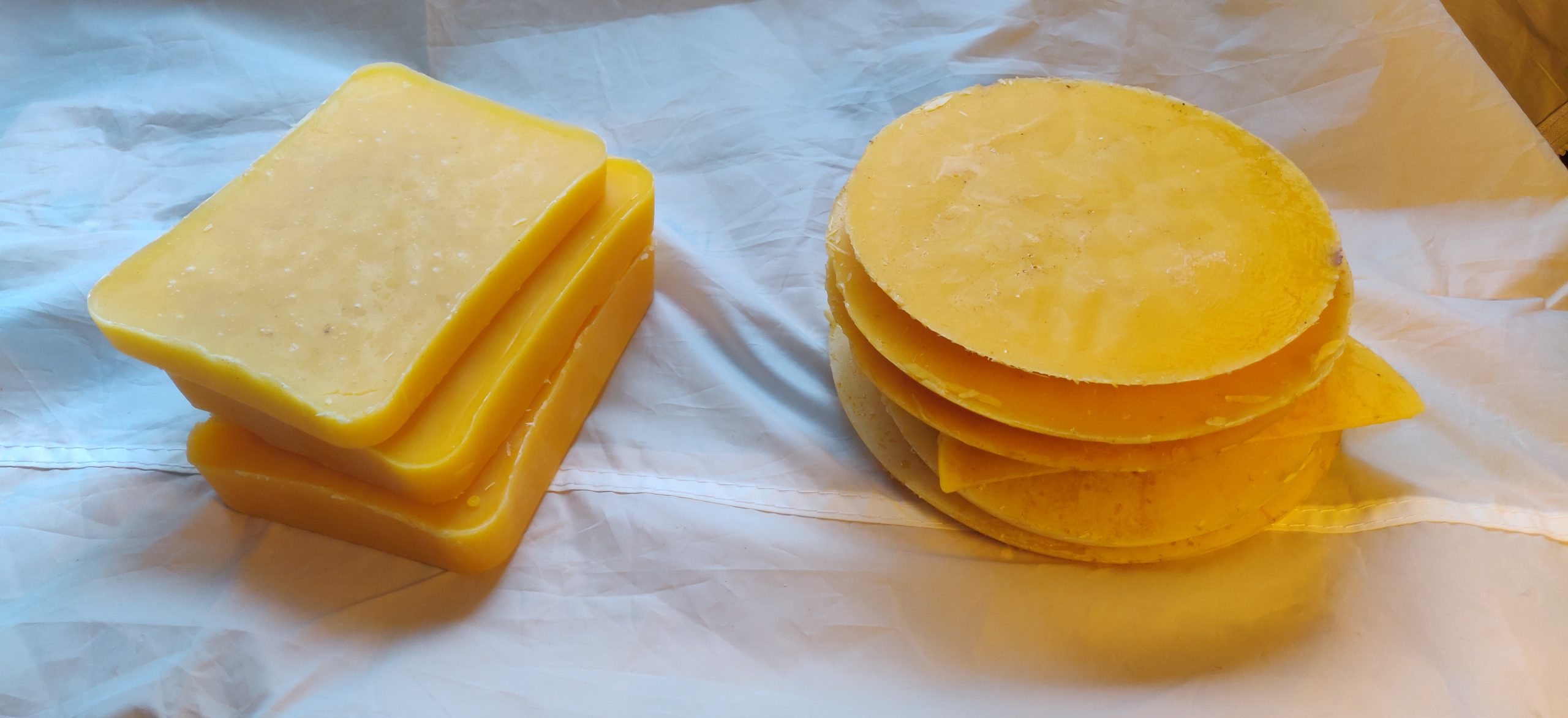
The top and bottom bars of super frames are scraped, removing the hard brace comb as they easily squash bees during the season when supers are returned to a hive.  All these scrapings are saved and rendered down in time. It is important to replace old brood comb on a regular basis with foundation. And for us to buy foundation requires beekeepers to supply wax which can then be processed for us. So do keep all your scraps of wax – they do mount up. The Association pays £4 per pound of reasonably clean wax and we need around half a ton in order to buy the foundation we stock each year.

We had an excellent talk on bait hives recently which I think will be available for members to watch. An aspect of bait hives is to leave some blank brood frames in a brood box with wooden kebab sticks. Their purpose is to strengthen the comb that bees will naturally draw when they decide to move in. That’s another job I shall tackle in the coming weeks. This may have whetted your appetite for bait hives so you will need to catch up with the talk to see how all this fits in.

That’s all for 2021 so season’s greetings to all.

Wally

October 2021 Apiary Notes from Wally Thrale
We are at the end of September and feeding should be well under way or finished by now. Last week the weather was summerlike and it was possible to inspect colonies to assess them and move empty frames around for the bees to fill. Bees seem to lose interest with the outside frames during feeding so can go into winter with ones or two empty frames. Placing full ones close to the wall and moving empty ones nearer to the nest encourages bees to fill these frames. By filling all available frames can mean the difference to a colony surviving the winter or dying out!

However, don’t be tempted to leave a feeder on a colony well into winter, especially if it already feels heavy enough. Doing this allows bees to store syrup in cells as the adult bees emerge thereby preventing the queen from laying in them. This means the size of the brood nest becomes smaller and smaller with potentially not enough winter bees for the colony to survive the winter. Or, if it does survive it is very weak in springtime and struggles to build up.

Knowing when a colony has sufficient stores is not easy to convey in these notes but comes from experience I’m afraid. Remove the roof (to give a more accurate idea of weight) and lift the brood box. I expect it to weigh around a sack of potatoes, i.e. 25kg. Unfortunately not everybody knows what a sack of potatoes feels like but that is the best I can do.

Once a colony has enough stores I return a super if I think the apiary will have a strong ivy flow. It appears that bees do not overwinter that well if they have a lot of ivy honey so I prefer the bees to place it in a super which is removed when ivy has finished flowering.

As an aside, one of the reasons I prefer using commercial brood boxes is that I can feed a colony till it feels heavy but know that there is still space for the queen to lay. My commercial boxes seem to overwinter better the National boxes I run.

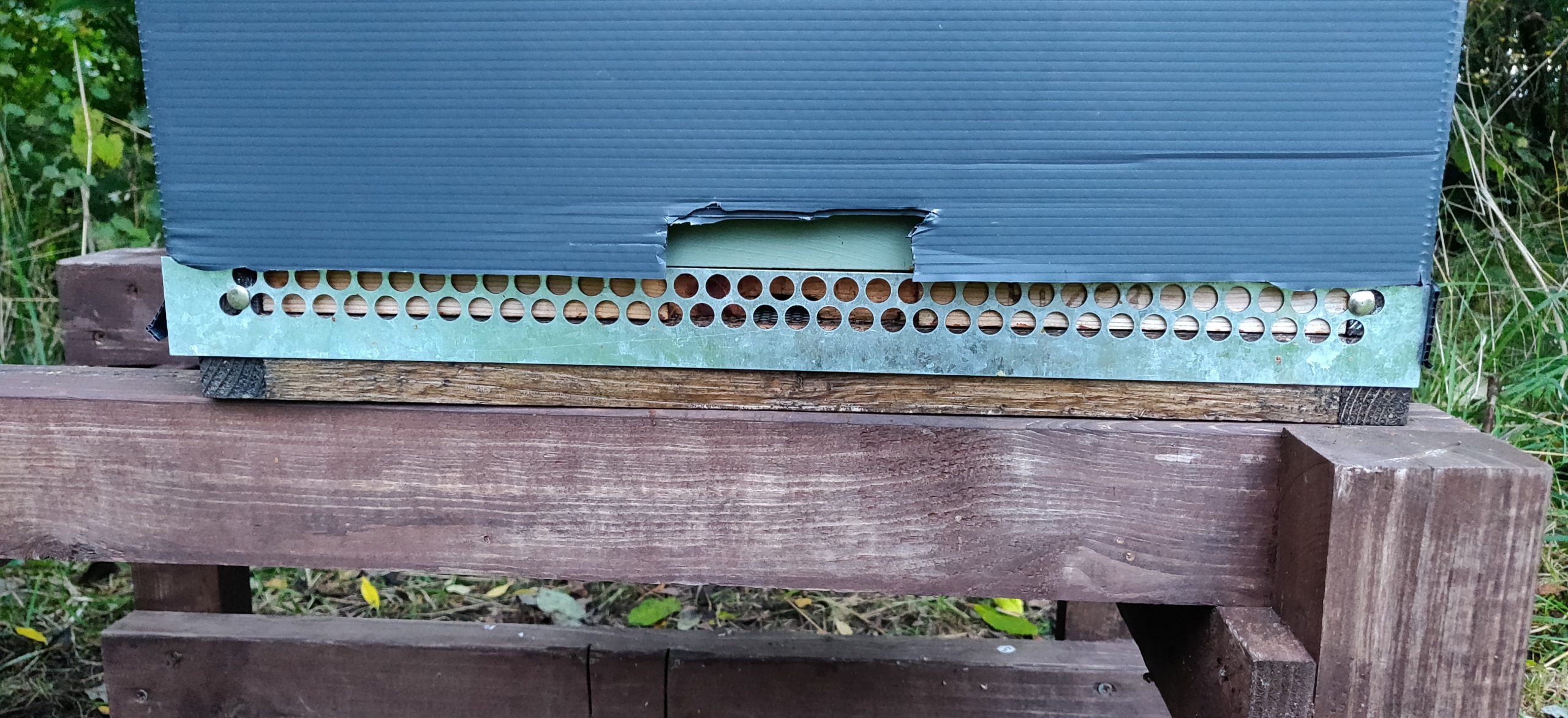
Looking through colonies last week I noted that most of them have a few frames of brood which will produce the winter bees. So bees will be bringing in pollen to feed the brood and a lot of it is ivy pollen. So don’t place mouseguards on hives for a while as they can knock off the pollen load from a forager. Generally it is better to place mouseguards after the first frost which hopefully will be several weeks away but, as we have seen with our weather this year, we just don’t know what we will have. As Mark Twain said: “climate is what we expect; weather is what we get”.

If you treated for varroa with strips, pads or trays remember to remove them when treatment time has elapsed. This can prevent mite resistance developing especially if Apivar, Apistan or Bayvarol were used.

Finally, if you are new to beekeeping and go to your bees later in autumn to place mouseguards on the hive, do make sure you are wearing protective clothing. A colony can appear very inactive lulling the beekeeper into thinking “I’ll just put this place with a couple of staples and job done”. As soon as the guard is placed against the hive wall bees often tumble out quite enraged at being disturbed on a cold autumn day. So do put on your beesuit – it could save you from a serious stinging incident!

Regards
Wally