Zoom Talk – “Those Pesky Yellow Hornets” by Jack Silberrad
We have an exciting new Zoom talk by Jack Silberrad on Wednesday 4th November. Jack talked at our last AGM and you will remember how knowledgeable and also entertaining he is!
This year YLH were found in Cambridgeshire – so they are getting closer.
It is easy to be complacent. It would be a mistake to only take action when you find your apiary under attack with the bees too scared to come out of their hive – preferring to starve themselves to death rather than face the hornets.
Find out the current state of play, and what we need to do to remain vigilant to prevent the spread across Bedfordshire.
The talk is on zoom – you will automatically be sent the link to the talk on the day if you have reserved a ticket.
Andrew Durham of Cambridgeshire Beekeeping Association gives an appraisal of efforts made in Europe and the UK on dealing with the Yellow-Legged Hornet. The session was hosted by the British Beekeepers Association on Wednesday 3rd September 2025; a recording can be accessed here.
This update from Peter Davies, Operational Delivery Lead at the National Bee Unit, was hosted by the British Beekeepers Association on Tuesday 2nd September 2025. A recording of the session can be found here.
The following are the key points:
Eradication phase continues.
343 credible sightings (out of 13,000 reports)
87 nests confirmed (majority destroyed, rest in progress)
Trial of micro-transmitters fitted to hornets – nests found in less than an hour
Beekeeping association Asian Hornet Teams (AHTs) provide useful support
We need to continue vigilance, awareness, identification, reporting.
Monitoring
NBU advice is that, in areas that are not at high or medium risk of YLH presence (like Beds), do not use kill traps as they have big impact on by-catch.
Preferably, use open monitoring i.e wick stations.
Selective traps that have no/limited by-catch (e.g. Gard’Apis or VespaCatch with 6.5mm escape holes) are OK if properly used and monitored.
Monitoring need varies with season and local risk level (proximity to any previous years’ nests); so selective and killing traps are ideally to be used only near areas where there are confirmed sightings.
Nigel Semmence from the National Bee Unit (NBU) gave an update on the yellow-legged Asian hornet (YLH) situation on Tuesday 11th March.
The following are the key points:
2024
24 nests destroyed – South East England.
First evidence of overwintering/breeding in UK.
29,611 reports but only 71 confirmed – 0.2%. We need to continue to educate the public on how to identify the YLH.
2025
Eradication phase continues.
1 confirmed single hornet – January – Oswestry, Shropshire.
Spring YLH queen surveillance has been approved for the NBU – they are monitoring 5 km zones around 7 high risk points identifiied in Kent/E. Sussex.
We need to continue vigilance, awareness, identification, reporting.
Monitoring
NBU advice is that, in areas that are not at high or medium risk of YLH presence (like Beds), do not use kill traps as they have big impact on by-catch.
Preferably, use open monitoring i.e wick stations.
Selective traps that have no/limited by-catch (e.g. Gard’Apis or VespaCatch with 6.5mm escape holes) are OK if properly used and monitored.
Monitoring need varies with season and local risk level (proximity to any previous years’ nests); so selective and killing traps are ideally to be used only near areas where there are confirmed sightings.
Nigel Semmence of the National Bee Unit presents the latest information (recorded at the National Honey Show at the end of October 2024). Nigel explains the UK strategy as well as results.
This week has been designated by the British Beekeepers Association (BBKA) as Asian Hornet Week. The intention is to increase public awareness of the threat that this voracious insect poses to our pollinators and, in particular, to encourage accurate identification and reporting. By end of July 2024, over 22,000 reported sightings were incorrect and only about 60% of sighting reports included a photo which is vital for confirmation.
To that end, the BBKA have provided the following which we encourage beekeepers and members of the public to read and to help distribute:
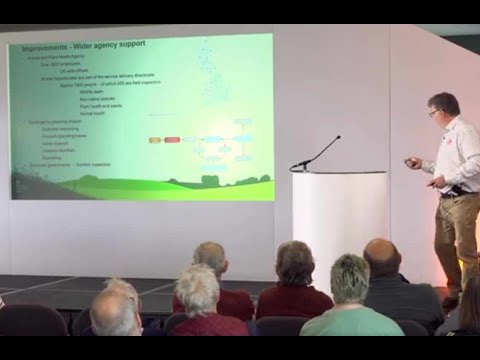
Nigel Semmence, Contingency Planning and Science Officer, Animal and Plant Health Agency (APHA)/National Bee Unit (NBU) presents a special update on yellow-legged Asian hornets.
We use cookies to determine if you are logged in as a Bedfordshire Beekeepers Association member or a member of the public. Please choose how you would like to proceed using the buttons provided:
Cookie Preferences
Manage your cookie preferences below:
Essential cookies enable basic functions and are necessary for the proper function of the website.
Name
Description
Duration
Cookie Preferences
This cookie is used to store the user's cookie consent preferences.
30 days
These cookies are used for managing login functionality on this website.
Name
Description
Duration
wordpress_logged_in
Used to store logged-in users.
Persistent
wordpress_sec
Used to track the user across multiple sessions.
15 days
wordpress_test_cookie
Used to determine if cookies are enabled.
Session
Statistics cookies collect information anonymously. This information helps us understand how visitors use our website.
Jetpack's built-in visitor analytics. It records page views, referring sites, search terms, and outbound link clicks, and also carries the shared visitor-tracking library used by Jetpack Instant Search and WooCommerce Analytics.