Month: November 2023

2023 Honey Show Results

A message from the Honey Show secretary, Sue Lang:

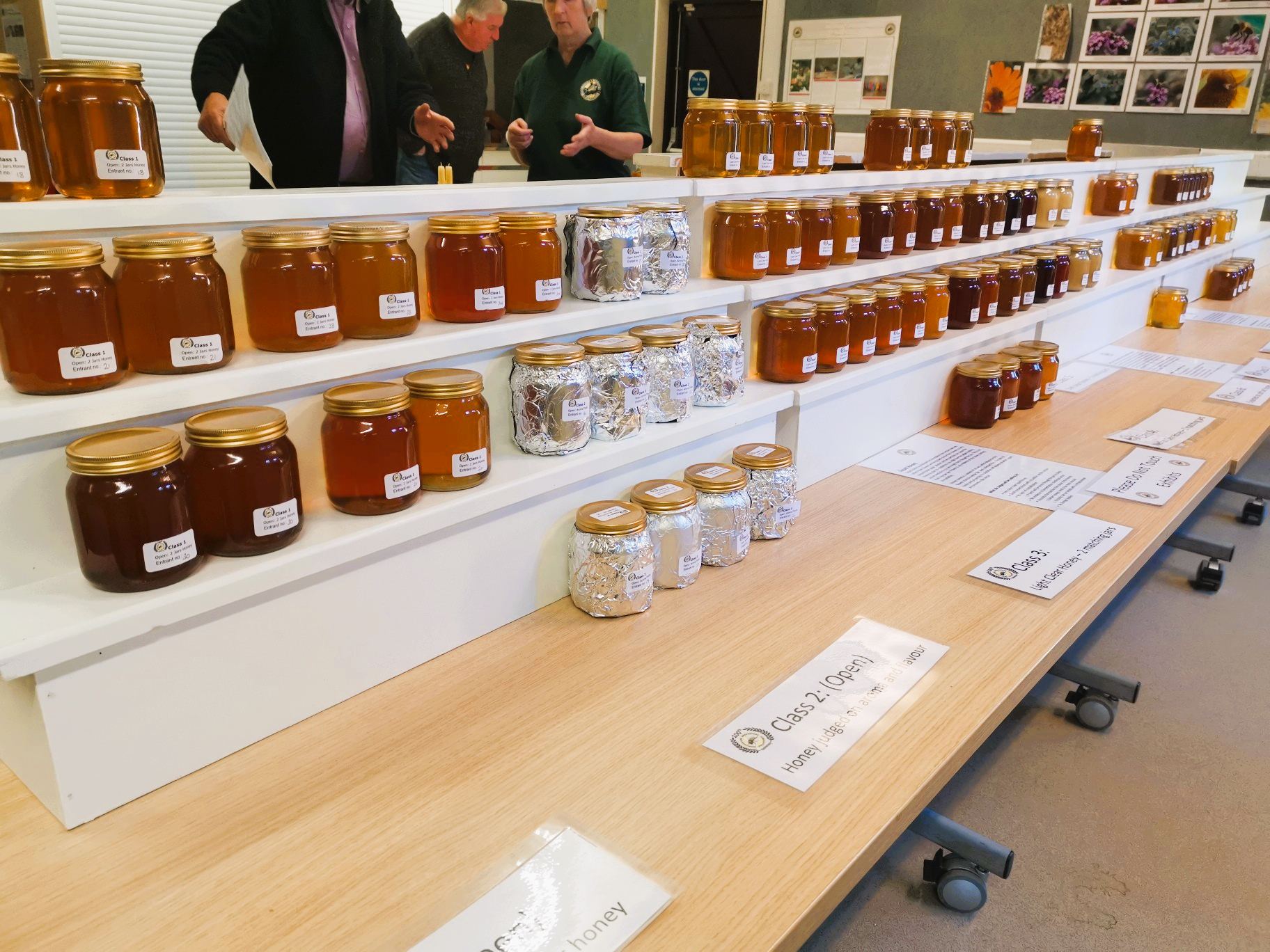
Thank you to everyone who entered/helped at the Honey Show and Festival on Saturday 7th October at The Discovery Centre, Luton.
It was a brilliant day, lots of great quality entries for the honey show, and lots of people through doors for the festival. The stalls were swamped and all the honey was sold. There was also great interest in the Yellow Legged Asian Hornet stand. This event is only successful because of all the people who give up their time to support the association, so Thank You again.

I’m very pleased to report that Bedfordshire came 2nd this year in the Federation Cup, hosted by the National Honey Show. Thanks to the class winners at Bedfordshire’s honey show, who kindly allowed their winning entries to be put forward (Wally Thrale, Phil Archer, Caroline Luxford, Sue Lang)”

Results and Placings

Trophies and Awards

National Honey Show Federation Cup Beds entries and places


The 2023 Honey Show was managed using the following:

Honey Show Schedule 2023 – details and description of entry classes

Rules for 2023 – please make sure you follow these rules to ensure that all your hard work is judged!

Labelling Exhibits – details of how to label your exhibits

Recipes – these are the recipes that should be used for our show (note they are not the National Honey Show recipes)

Awards for 2023 – details of the awards given for various classes

Beds BKA Honey Show Entry Form 2023 – all entries must be received by midnight 1st October 2023


November 2023 Apiary Notes from Wally Thrale

The main reason for these notes is to highlight to members the dramatic number of Asian hornet (AH) nests discovered this year. So far the number of nests located and destroyed stands at 71. That figure is far higher than all nests found in previous years combined. It now looks as if some nests may have produced queens that will overwinter and start the process next spring. Trustees are very concerned about this matter as many beekeepers still seem to be unaware of the seriousness of the problem.

There will be a meeting on Tuesday 5th December at Flitwick village hall to inform members about the problems AH will cause us. Beekeeping on the continent has been seriously impacted by AH and we all need to understand how we should monitor for AH and how to deal with AH if they become established.

More details of this event will be sent to members soon. Please do make every effort to attend this meeting. We must be vigilant from now on – we can’t reply on bee inspectors locating and destroying all AH nests. We all need to understand the gravity of the situation.

We will also cover Asian hornets on the Training day at Flitwick village hall on Saturday 27th January 2024. Other topics for the day are:
Assessment of approved varroa treatments;
Using honey as an ingredient;
Overview of commercial brood boxes;
And surviving winter – for bees!
This event is available to sign up on Webcollect (members only). Follow the link:

https://webcollect.org.uk/bedsbka/event/improver-training-day/

Now for the apiary Notes. Although there is little to do with our bees at this time of year I thought a little reminder of jobs that need doing before winter might be of help.

Feeding syrup should have finished a while ago. If colonies become light then feeding with fondant will be necessary. The Association has stocks of fondant so contact your local stockist to check for availability.

All my colonies now have a 50mm piece of insulation (Celotex) above the crown board and below the roof. This should help retain heat in the brood box as it is exactly what we do in our homes. Now that pollen foraging is minimal mouse guards should be put in place. At the same time wire netting is wrapped around the hive to keep woodpeckers away during cold spells.

It is then a matter of keeping an eye on colonies over the winter and checking they have sufficient stores, especially as we approach spring, which is some time off.

Winter is a good time to carry out routine maintenance of kit that is not needed until active beekeeping starts again. So queen excluders are scraped clean and edges treated with a heat gun. Supers and the frames are scraped and just generally tidied up. Personally, I prefer to treat external surfaces of hive parts (e.g. Cuprinol, Barretine etc) on a regular basis to prevent the wood decaying. Hives properly looked after will be serviceable for decades.