Month: June 2024

July 2024 Apiary Notes from Wally Thrale

At last the weather has become ‘summery’ and the bees are making er, ‘honey’! Up until a couple of weeks ago I thought there wouldn’t be a summer crop; bees were eating what stores they had and feeding was becoming a consideration. Now supers have filled with the warm sunshine.
Most of my colonies are on four supers to accommodate the bees. But these supers are now quite full and I would like to extract some of them. So to try and force the bees to finish processing the honey in the supers I want to extract, I have left two lighter supers below the crown board and two heavier ones above it. They have been left like this for a few days which allows bees to store fresh nectar in the supers below as they tend not to store it in the supers above. A quick ‘shake’ test with a frame next to the wall to test if honey comes out of the comb confirms the honey is safe to extract. Supers can then be returned to hopefully be filled again.
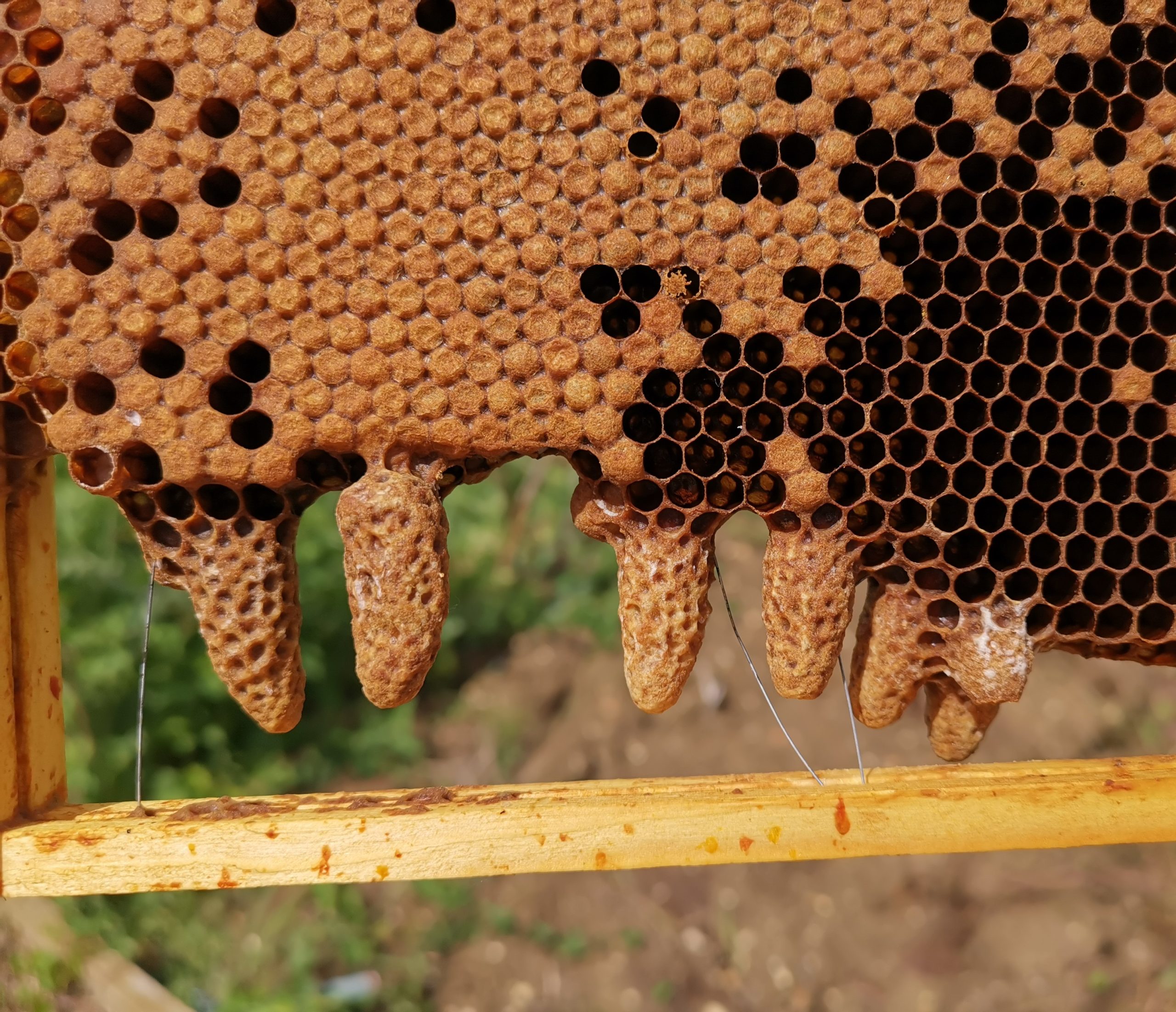
The poor weather we experienced for quite a while stopped many colonies from swarm preparations but that doesn’t mean swarming is over yet. It is important to inspect colonies for queen cells and carry out an artificial swarm if necessary (see last month’s notes for a couple of methods). Losing a swarm now that the weather has improved and a honey flow taking place means a hive will produce very little honey if any.

Now we are approaching July it is the time when wasps tend to make their appearance around our colonies. Being prepared is better than trying to stop wasps once they have targeted a hive. It is a good idea to reduce entrances down to around an inch or so, smaller than this for nucs. Once wasps have found a way into a hive it is very difficult to stop them. They can easily take out a weak colony or nuc in a short time. They then move on to the next target. Do get the foam ready and apply soon.

Many beekeepers treat for varroa in August which means no honey should be present. Do have your treatments ready to use as some of them are time and temperature critical. If they are not applied as per instructions they are barely effective. This is a waste of money but will also compromise the colony as the winter bees will not be in good condition. Winter bees need to be healthy (and lots of them) for a colony to survive to next spring.

On a different topic I recently wrote an article on rendering wax using a slow cooker. This I find a very effective way to render down spare wax into a block that can then be traded with the Association. Remember that if you want to buy more than 4 packs of foundation you will need to trade the equivalent weight in wax to buy discounted foundation. You can find the article by following the link:
https://bedsbka.org.uk/rendering-wax-by-wally-thrale/

Next Tuesday (2nd July) we will run a Zoom session to talk over any of these points or anything else you may wish to ask. The invitation will be sent out nearer the time.

Finally, it is not too late to make nucs to overwinter and this is something all beekeepers should try to do in case of a bad winter.
June 2024 Apiary Notes from Wally Thrale

Each spring we have weather issues to contend with. Looking back at the previous years we have had: record amounts of spring sunshine; followed by air frosts on most nights during April the next year; then one of the driest April / May periods the following year and this year cold and wet weather. The weather for each of those years made it difficult for bees and beekeeping (except the sunny one!).

But now we are at the height of the swarm season so checking for colonies making queen cells is essential. If colonies have already been artificially swarmed with frames of foundation do check the bees are drawing comb – sometimes it is necessary to rearrange these frames so that all the foundation is drawn by the end of summer. If a colony goes into autumn with undrawn comb they may not have enough space for their winter stores. Bees are less keen to draw comb late in the season so ensure all foundation is drawn by the end of summer.

On the swarming theme, some beekeepers are not sure how best to deal with a colony that has queen cells as there are so many ways to deal with this situation. So here are two overviews – one where the queen is found and the other where the queen cannot be found. Note – for these overviews the original colony with the queen is called the ‘parent’ colony and the new brood box introduced is the ‘artificial swarm’.

  1. a)       Where the queen is marked and can be found.

Locate the queen and cage her and put the cage to one side in a safe position.

Move the parent box away several feet in the apiary and then place an empty brood box (artificial swarm) on the original site so that flying bees will return home.

My preference is to add two frames of sealed brood (remove any queen cells first!) to the artificial swarm from the parent colony and then fill the box with empty drawn frames and foundation. If possible add no more than four frames of foundation. This is why it is important to have spare drawn frames.

Return the queen to the artificial swarm and return the supers here as well.

Now leave one good looking open queen cell in the parent colony with the brood, knocking down all the others.

  1. b)      Where the queen cannot be found. Note this applies only if open queen cells are present; if sealed queen cells are there the queen may have already have left the colony.

Locate a frame containing eggs and young larvae only and knock down any queen cells from this frame.

Place this frame with attached bees in the artificial swarm in the centre of the box. Place drawn frames either side of the frame with eggs and fill the remainder of the box with foundation – but no more than four if possible.

Return the supers to the artificial swarm.

Replace the frame taken from the parent colony with a frame of foundation.

Leave for seven days and then –

Look in the artificial swarm – if there are no queen cells then the queen is probably here and eggs should be present. If queen cells are present select one good looking one and knock down the others.

In the parent colony look for eggs; if they are present then the queen is here and the house bees should have torn down the queen cells. If queen cells are present then select one good looking cell and knock down all the others. Put a drawing pin in the top bar with the queen cell and look again after eight days – the queen cell should have an emerged queen.

A couple of final points. When taking off the spring crop ensure the colony has enough stores to carry on otherwise they may starve especially as the ‘June gap’ is upon us.

Next Tuesday is the next Zoom Improver session for which an email invitation will be sent nearer the time. If you have any concerns or questions please do ask on the day. You can either send a message via the Zoom ‘chat’ function or talk about your question.