Category: Article

April Apiary Notes

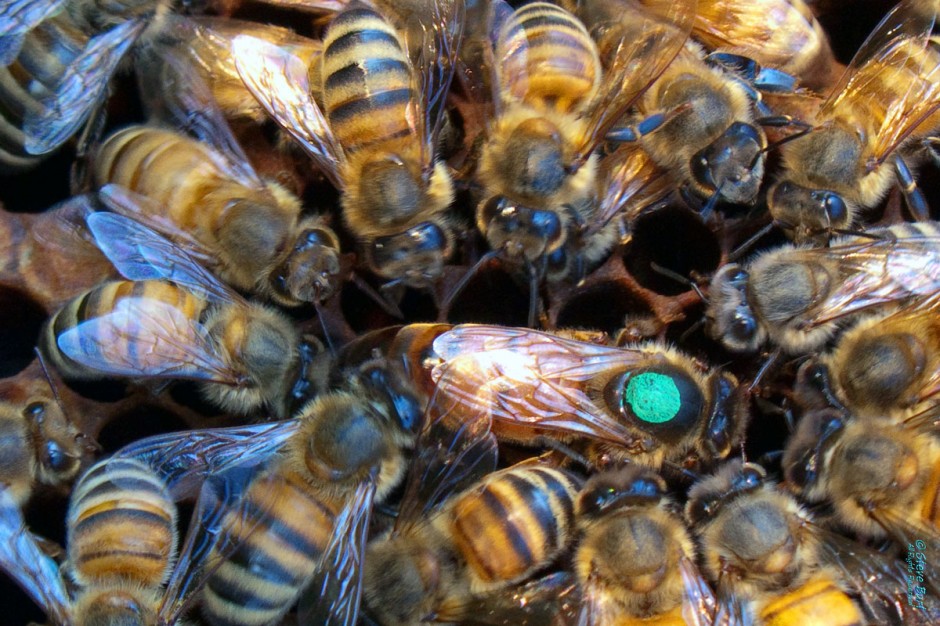
Written 2nd April. The active season is almost upon us. There have not been many days recently that were warm enough to look into hives but the forecast is promising, especially for Sunday and a good part of next week. My first priority is to find, mark and clip my queens. Managing colonies is so much easier with marked queens when it comes to swarming time. It does take a while to learn to find queens easily but this is the best time of year to do it. This Sunday, If possible, look into the hive around midday. Many bees will be out foraging therefore making it easier to spot the queen as there will be fewer bees on the frames. Try not to look at individual bees but scan around the edge of the frame first and then work inwards, keeping a picture of a queen in your mind’s eye. After finding queens a few times the confidence builds making it easier for the next time.

Colonies with a brood box full of bees should have a super placed below the crown board. If the brood box is not yet full of bees place a super over the crown board so it easier for the bees to keep warm overnight. The super gives bees space during warm days to spread out though we may have frosts for a few more weeks yet. Strong colonies will build up quickly in the coming weeks so will need more space when the current super starts filling with bees. If colonies become overcrowded it can cause bees to start swarm preparation much earlier than they would otherwise do so.

On the topic of swarming, this year I intend to carry out pre-emptive artificial swarm control. This I know may seem unconventional to some but there is a good reason. Last year I had an accident which means I have less function in my right hand. Taking supers off and returning them each inspection every 7 to 10 days is rather awkward. So when I consider bees are nearing queen cell making time I shall artificially swarm the stronger colonies. More on this subject next time as I hope bees will be patient and wait until May. Always the optimist!

To those who are fairly new to the craft the season is about to start – it is almost as if someone turns on the switch. Suddenly so many jobs need doing so be ready and prepared. Have clean kit ready to hand, supers available with requisite frames and brood frames ready with foundation. Try to be ahead of the curve and anticipate what you will need in the coming weeks. And do try and make some nucs during the season – they are great insurance should there be heavy winter losses in 2021. If they become surplus there are always other beekeepers who will be looking out for bees.

Enjoy your beekeeping during these difficult times.

Regards

Wally

Coronavirus Update for Beekeeping Members

The situation with the COVID19 pandemic is changing rapidly, although the advice now is that we are on lockdown and are to avoid all but essential travel and practise social distancing.

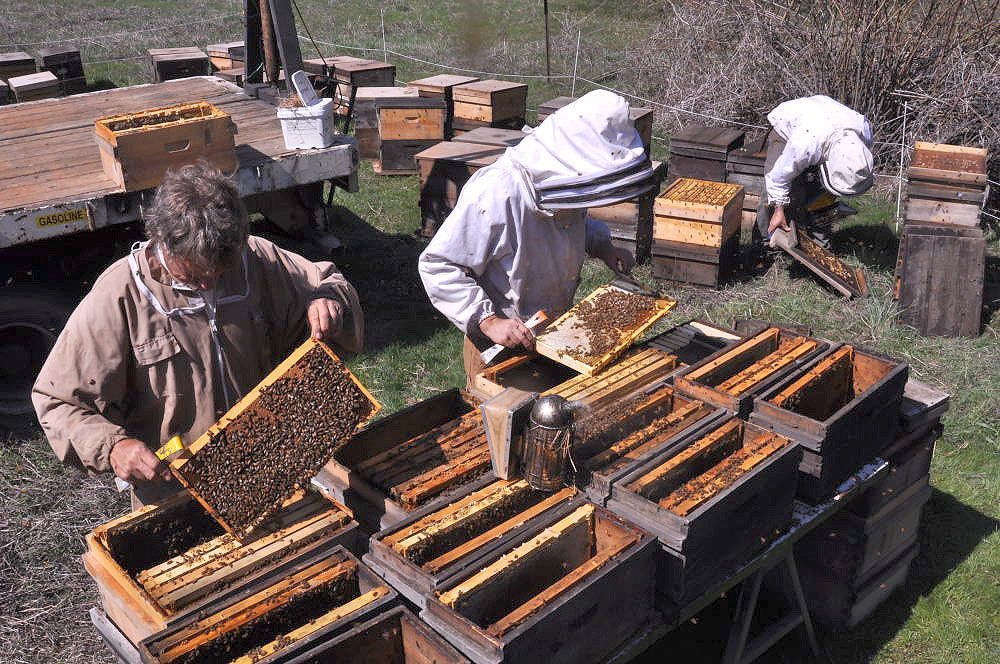
The National Bee Unit (NBU) has just published advice to beekeepers, which you may have seen.  Bees are classed as livestock and so need to be looked after appropriately. This means that we are allowed to visit out-apiaries and manage our bees. However, extra care must be taken in doing so. The emergency services are already stretched and beekeeping accidents as well as road traffic accidents will not be helping them, so please be extra careful if visiting out-apiaries. In addition social distancing must be respected, and this means inspecting a colony on your own without anyone else being within 2 metres of you unless you are from the same household.  The NBU stresses two people maximum in an apiary.

If you are unable to care for your bees then our usual contacts are available for advice, including District Advisers and Improver Group leaders. You may also need to contact beekeeping friends, particularly if you cannot visit your bees because you are unwell or are self-isolating.  Equally, if you are able to help others, please let us know.

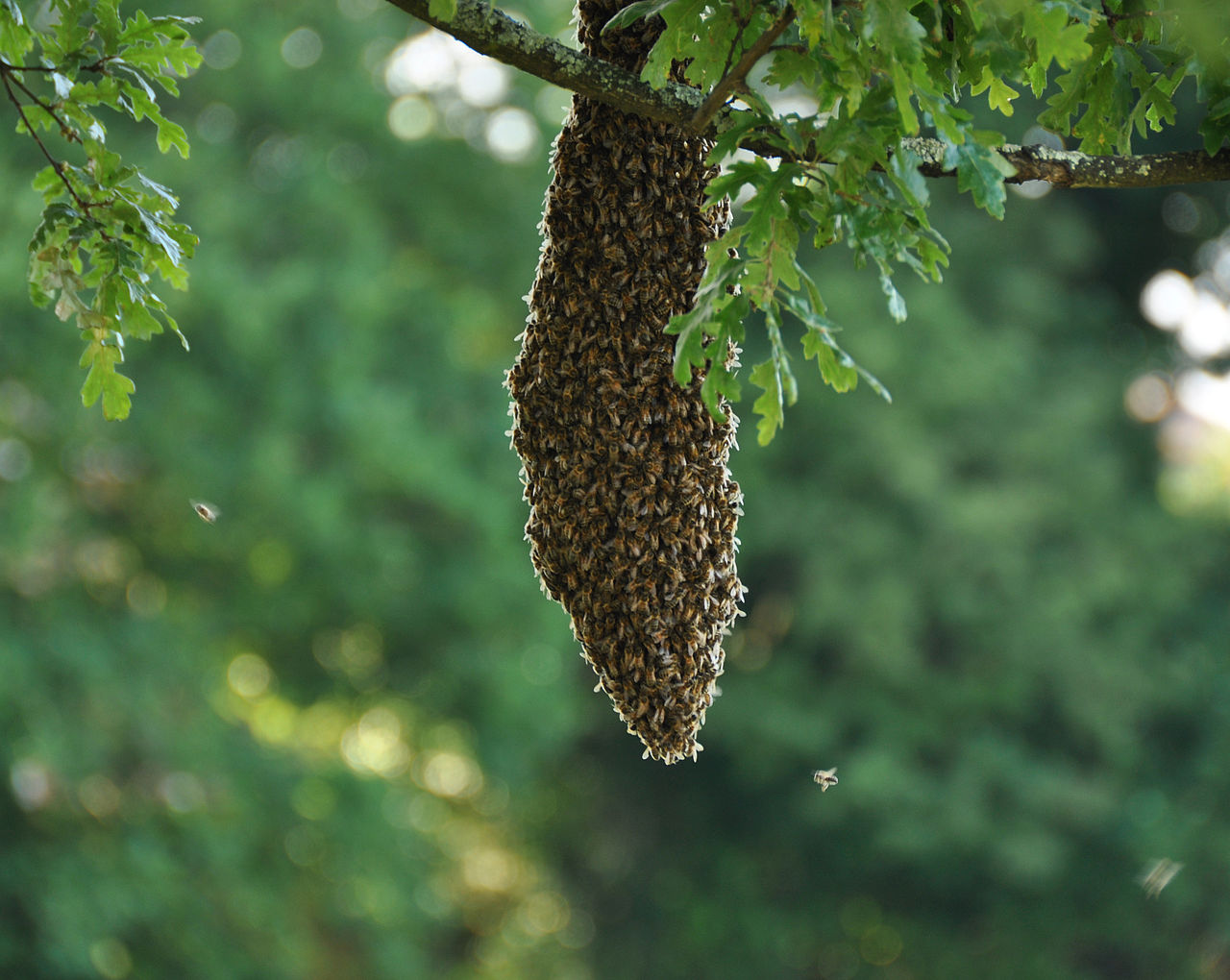
Swarm collection can carry on as before, but please follow government guidelines on travel and social distancing.  There might be dangers of unforeseen contact with other people, for example in a public space, or if it is not clear where the swarm is or the only access is through someone’s house.  Do feel that you have the right to refuse to deal with a swarm at any stage if there are risks in the situation.

As you will have seen Beds BKA has already cancelled all meetings including Beginners Courses, Apiary training and trustee meetings until further notice.

March Apiary Notes 2

The winter we had has been a very mild one and, as a consequence, many colonies have come through with more bees than usual. Today I checked most of my hives with the intention of placing a queen excluder and a super above the crown board to provide space should the bees need it. If they become too cramped early in the season they can start swarm preparations quite early. Supers were only added to strong colonies, i.e. those with three quarters or more of adults in the brood box.

However, instead of giving some colonies more space some needed feeding again even though they already had one or two nuc feeder trays. I find it easier to use these small trays to provide a top up rather than bring the contact feeders back into use. Because some colonies have almost a brood box of adults, they are also raising lot more brood than usual and to raise that brood bees need stores.

So do check your colonies, especially the stronger ones as they are the ones prone to starvation. Use a strong syrup to tide them over; the temperature is high enough now for them to take it down.

Wally

Queen rearing

Queen breeding and rearing are two areas that many members have shown a keen interest in and further to our talk earlier in the year from Kevin Thorn on the native bee reserve at Abberton Resevoir, we have invited two of our members with experience in this area to talk about the projects that they have been involved in.

Paul Walton has organised a local bee breeding group with the aims of demonstrating the methods used by COLOSS to evaluate bees and encouraging it’s members to follow these in order to find objective data with which to improve their breeding stock.  He will be reporting back on the successes of the group.

The presentation is here.

Dave Corbett has run a number of sessions to demystify the ‘dark art’ of queen rearing, and enable beekeepers of all levels to have a go at raising their own queens, with a number of members having attended practical sessions in the apiary. He aims to encourage bee improvement by equipping members with the skills and and understanding of how they can raise their own queens and the impact that selection has across their surrounding area.

The presentation is here.

March Apiary Notes

At the time of writing it is still raining and no sign yet of any prolonged dry spell. Talking with a farmer yesterday there is limited time now for fields to dry out to enable them to sow spring crops. Spring bean falls into this category which is often in the ground by this time. So there may be limited agricultural forage available for our bees this season, especially as there is less oil seed rape around this year.

March is the danger month for our bees as they may run out of stores before they can forage for the first nectar flow. Do check and heft your hives and feed fondant to tie them over. If fondant is not available then soak a bag of white sugar in warm water for a few minutes and place the bag over a feed hole, making a small hole in the bag to allow bees access to the mixture. This is an extreme remedy but it is too cold as yet to feed them syrup in contact or tray feeders. If the outside temperature goes above 10c then bees are more interested taking syrup down. Remember, dead bees don’t make much honey!

Next week I intend to give Vitafeed to my bees. This is a protein powder and hopefully it will stimulate brood production. Looking at the rape near to my bees I think it will flower by mid April so stimulating the colony soon should provide a larger workforce when the rape is in flower. This powder is applied two or three times over the coming weeks to provide protein when bees are confined to the hive when bad weather prevents foraging.

Over the winter I have spent a lot of time maintaining my equipment in readiness for the coming season. New brood frames are partially assembled; the wax foundation will be added just before they are needed. Putting foundation in too early may let the wax buckle or be damaged or go stale before use.

Beetradex is just a week away at Stoneleigh and is a great opportunity to bag a bargain. A plug for the use of nucs. They are a great way to overwinter bees to make up for winter losses. At Beetradex there are various suppliers where nucs can be picked up at a good price. For more information on nucs see the article on our website:

https://bedsbka.org.uk/article/nucs-and-how-to-use-them-effectively/

Enjoy your beekeeping for the coming season.

Wally Thrale

January Apiary Notes

We are approaching the danger months for our colonies. In my experience there aren’t many colony losses until February or March. The main reasons for colonies dying out are beekeeper error or the weather. As the weather has been mild so far this winter bees have been more active than normal and therefore have used more of their stores. Or perhaps colonies weren’t fed sufficiently in autumn.

So it is important to heft colonies and feed with fondant if they are becoming light. It is best to give around 1kg of fondant at a time to keep the bees ticking over. Wrap the fondant in cling film and make a hole the size of a 50p coin. Place this hole over a feed hole in the crown board so bees can access the fondant through the gap in the film.

The temperature is too low now and probably will be for a while yet to feed syrup to bees. Daytime temperatures need to be around mid teens before bees will take syrup down readily. However, if spare frames of stores were kept to one side last autumn one or more can be placed in a colony that is running low. Obviously this manoeuvre needs to be carried out as quickly as possible at this time of year but it can save a colony from starving.

There isn’t much we can do about the weather but we can shelter hives out of the wind. This is the one time of the year when colonies can be moved less than 3 miles as bees will re-orientate when confined to the hive for many days. So if a colony would benefit from more shelter which is a short distance away, now is a good time to do this. Avoid jolting hives when moving them as the movement can cause bees to foul inside the hive which is to be avoided if at all possible. Bees will clean up the mess which can then spread disease, e.g. nosema.

Around the middle of March (weather depending) I shall start giving my bees a protein supplement in the form of Vita Feed. This is to boost egg laying by the queen so that a good work force will be available for the rape flow. Although the acreage for rape is lower this winter there are fields around the county and I like to build colonies up in readiness for this crop.

Wally Thrale

Nucs and how to use them effectively

Why ‘nucs’ are important in beekeeping

There are many uses for nucs in several beekeeping management situations. Some examples of their use are to:

  1. overwinter spare queens and bees to make up for winter losses
  2. as part of artificial swarm management
  3. introducing bought in queens
  4. make increase from a colony with queen cells

This article aims to provide detail on the type of nucs that are available, how to make up nucs and situations when they are can be part of beekeeping management.

An important point to bear in mind for all nucs is that they will require feeding otherwise they will struggle to thrive. There are various tray feeders available which are fairly cheap and are easy to fill and use. So nucs must be inspected regularly to ensure they have enough food. Pollen isn’t normally an issue as there normally enough bees to forage for their protein.

First the type of nucs. They can be wooden or made from polystyrene. Equipment manufacturers provide wooden nucs which generally hold five or six National frames but they can be quite expensive. Someone with basic carpentry skills can make a 5/6 frame nuc from timber offcuts which are just as good as those professionally made. The important point to remember when making them is to ensure bee space measurements are taken into account. If the nuc is to overwinter as a colony then the thickness of the wood should be at least 12mm to retain heat in the cold months. If they are to be used for the summer only then thinner wood is acceptable.

Another option is to modify a National brood box by placing a thin piece of ply down the centre of the box, make up two separate crown boards to cover each section and screwing a floor to the brood box. It is important that each section is bee tight otherwise bees will mingle between the two halves which must be avoided. This type of nuc is suitable to overwinter as each colony helps to keep the other warm.

Polynucs are very good at overwintering colonies as they retain heat very effectively. Some types have a well so that bees can easily be fed; other types require a frame feeder to feed the bees. Generally, polynucs take 6 National frames which allows for a reasonable size colony in springtime. The downside of polynucs is that they cannot be cleaned using a heat gun or similar whereas wooden hives are fine to do so. However, they can be cleaned with hot water and soda crystals which is very effective at removing propolis and dirt.

If a 6 frame colony is transferred to a National brood box in early spring, it can grow to a full colony within a few weeks and will produce a crop in that season. It is advisable to feed the bees with syrup when they are transferred along with the addition of drawn comb if available. Bees are reluctant to draw out comb early in the season so drawn comb from the previous year should be stored carefully overwinter, i.e. away from rodents and wax moth.

Polynucs are also available to split into two sections, thereby making two 3 frames nucs from a single box, each with their own entrance.

So there are many ways that a small container can be constructed or adapted to enable bees to overwinter.

Making up nucs.
A point to bear in mind when making up a nuc is where it will be located once stocked with bees. If in the same apiary then many bees will return to the home colony. However, if it is moved away to another apiary that is at least a couple of miles away then not so many bees are needed. Yes the three mile rule can be bent a little here as not too many foragers will find their way back to the original site as long there is forage at or near the new site.

If the intention is to make a queenless nuc then It is important that the queen is located in the main colony and caged whilst the nuc is made up. Generally, it is a good idea to take a frame of sealed brood with attendant bees from the parent colony and place in the nuc. Then add a frame of stores with bees followed by frames of empty drawn comb and or foundation. Now shake bees off frames from the parent colony into the nuc. It is better to add nurse bees to a nuc so, before shaking bees into the nuc, give the frame a medium shake. This causes mostly flyers to drop off the frame leaving nurse bees hanging on. Now shake the frame very firmly into the nuc which will dislodge the nurse bees. Do this with up to three frames from the parent colony, then close the nuc up and place it in a shady area of the apiary. The number of bees needed will depend whether it is to be placed in the parent apiary or located elsewhere.

Another consideration is the time within the season that a nuc is made up. From mid July onwards robbing by wasps or other bees can be an issue, so make the entrance small and easily defendable. Placing wasp traps nearby the apiary will help reduce this problem.

Uses for nucs.
1) Introducing a bought in queen.
Introducing queens is a topic fraught with difficulties as bees sometimes kill the queen, which is costly. The best chance of success if to have a nuc with young bees. This is where siting the nuc is relevant as if placed in the home apiary the flyers (and they are generally more aggressive) will return to the parent colony leaving behind nurse bees. Leave the nuc queenless for 24 hours after making up as they are more receptive to receiving a queen. Suspend the cage with the queen between top bars in the centre of the nuc and leave her in the cage for a further 24 hours. Now snap off the tab on the cage preventing bees access to the fondant. The nurse bees will then eat the fondant and release the queen in due course. Leave the nuc well alone for 10 to 14 days and then check for the presence of brood. When the nuc starts to build up it can be transferred to a full box if that is the intention or over wintered in the nuc box.

2)  Make increase with a queen cell.
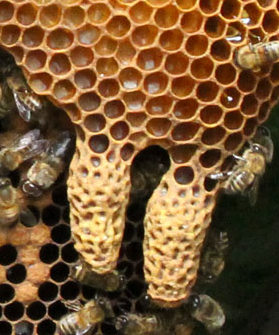
Here it is not necessary to have mainly nurse bees so the nuc can be sited in another apiary. Again, leave it queenless for 24 hours after it is made up. Queen cells can be harvested from a colony with swarm cells, cut generously from the frame so as not to damage the queen cell. Place the cell between top bars in the centre of the nuc leaving the queen cell hanging vertically. It is better to take cells that are mature, denoted by a darkening at the tip of the cell. These cells have a well developed queen inside and there is less chance of damage to her when handling the cell.

There are various types of kit (Jenter for example) or techniques (Miller method) to force a colony to produce multiple queen cells from a queenless colony. The sealed queen cells from this approach can be cut out and added to a nuc as above. The queens emerge in due course, go on mating flights and then come into lay fairly quickly. This is a good way to produce queens from a stock with desirable traits. If the Jenter or Miller method is employed the number of successful queen cells can be established after a few days and this determines how many nucs will be needed. They can then be made up a day or two before the queens are due to emerge according to the records kept as part of the queen raising process.

3) Part of artificial swarm process
The descriptions for artificial swarming mention using another brood box to split the colony in half. However, a nuc can be used to house the queen along with a couple of frames of sealed brood, stores and empty frames. Ensure no queen cells remain on the frames that are transferred to the nuc. Move the nuc to a different spot in the apiary or another apiary, adding extra nurse bees if the nuc is to remain in the parent apiary.
In the parent colony this leaves most of the brood along with nurse and flying bees. And most importantly queen cells. It is now necessary to go through the brood box and inspect each frame for queen cells. Shaking a frame with queen cells can damage the developing queen so do not shake the frame with a queen cell that you wish to use. Place a drawing pin in this frame so that it can be identified during subsequent inspections. The aim here is to leave the colony with one sealed queen cell or two at most. If bees are left with one queen cell the queen may die in the cell for a variety of reasons. Leaving two cells is an insurance but could cause the bees to swarm if both queens emerge. In order to reduce this risk select queen cells that are very close to each other on the frame. When the first queen emerges it is easy for her find the other queen cell and allow her to kill the occupant.
Once a frame is selected and placed in the nuc the remaining frames must be inspected individually; knock down all queen cells (open and sealed) and now shake each frame firmly. It is now much easier to spot other queen cells that were covered by the adult bees. It is good policy to return to this box a few days later and shake all bees from the frames but not the one with the drawing pin. The bees may have produced more queen cells from very young larvae – sometimes bees do this and other times they don’t. So to avoid losing a swarm this second inspection is important.

4) Make increase from a colony with swarm queen cells
When a good tempered productive colony makes queen cells it is a good opportunity to make several nucs from it. Locate the queen if still present and cage her. If there are enough queen cells on multiple frames up to four nucs can be made up. Place two frames from the parent colony in each nuc, one of which has a well developed queen cell. It is not necessary to knock down spare queen cells as these nucs are unlikely to swarm if more than one queen emerges. Add additional frames of drawn comb and or foundation.

Now, move the parent hive to another location in the apiary and place the four nucs in a circle around the location of the original hive, all pointing inwards to the parent’s hive original spot. Flying bees will return to this location and normally populate the nucs in a fairly even way.

The queen is returned to the parent hive and extra frames added to make up for the eight that were placed in the nucs. Add the supers on top of the colony containing the queen. This colony will now build up again and will be able to overwinter if that is the intention.

5) Housing swarms
Beekeepers are often called upon to collect swarms and nucs are an ideal home for them for a short time. As a nuc is small in size they are easy to transport if necessary. It is good practice to have a separate apiary for swarms so they can be checked for disease and temper before moving them to main apiaries. When they have been checked it is easy to move them elsewhere in order to transfer them to a full box.

Wally Thrale

December Apiary notes

Colonies are all ready for winter now with mouse guards, woodpecker netting and bricks on roofs. For my own peace of mind I like to visit apiaries occasionally during the winter to make sure nothing untoward has happened, e.g. tree or branch falling on hives.

However, there is a lot of maintenance I like to carry out in readiness for next year. For example, the top and bottom bars of supers frames often have brace combed built on them. This comb becomes brittle over time which means when used next year on a hive bees can be squashed between frames as the wax has become solid. So now is a good opportunity to scrape the top and bottom bars holding the super inside a wheelbarrow. The spare wax falls into the barrow and can then be easily collected (and rendered down to a block by using an Association steam melter!).

Personally I like to treat exterior hive surfaces of unoccupied equipment with Cuprinol (or similar) every few years as it helps to extend the life of this valuable kit. For hive stands I use Creosote as it is much cheaper but I don’t use this on hive parts.

It is also a good time to partially assemble new frames and pack them in empty honey jar boxes. Then come the season it is a simple matter of adding a sheet of foundation along with a bottom bar and wedge. If a complete frame is made up now the foundation will go stale over time and bees are less keen to utilise it plus the wax sheet could bend and / or be damaged over months.

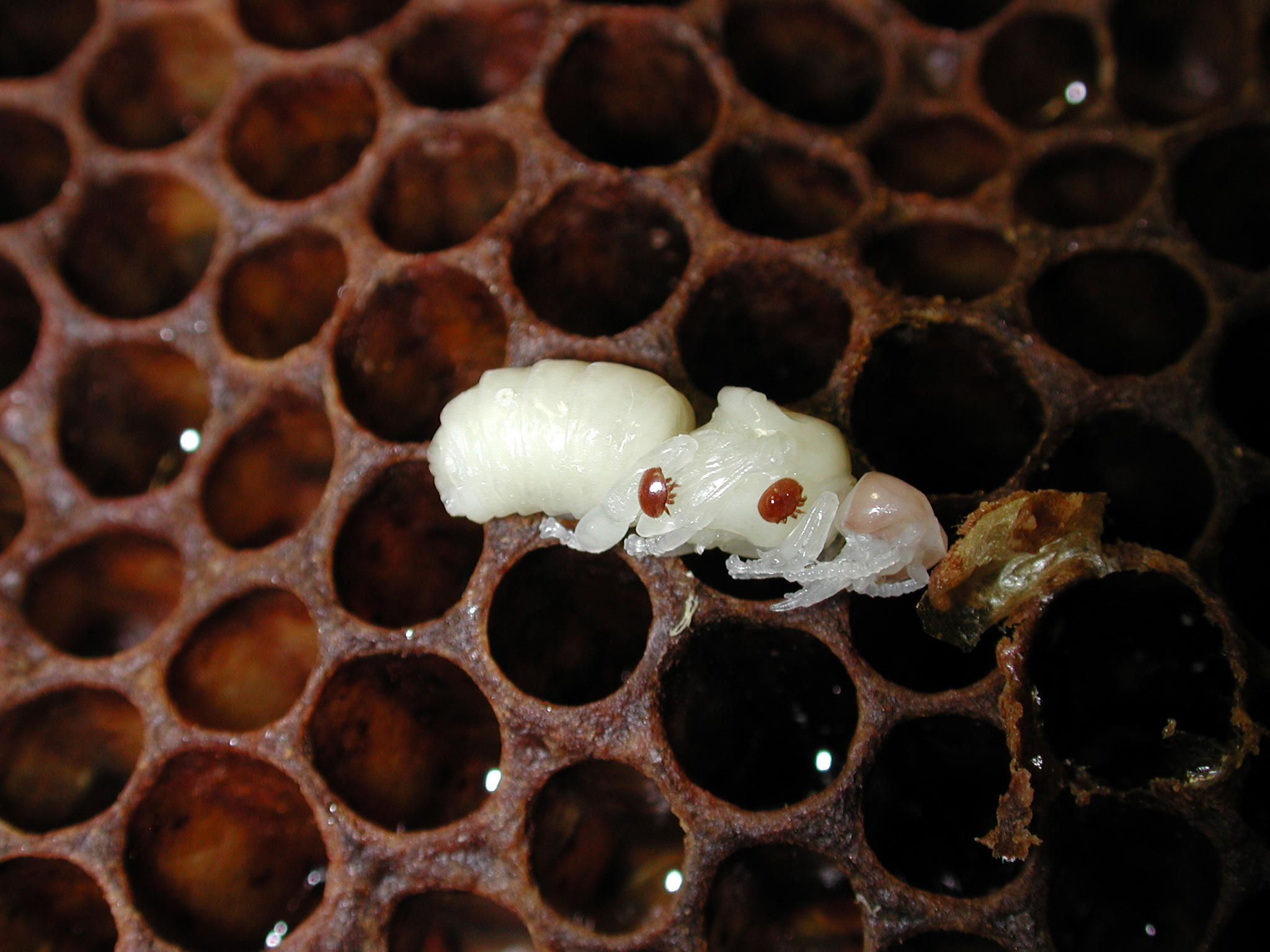
So there is little to do with bees other than treat for varroa with oxalic acid. The season is approaching the shortest day of the year which is when I like to apply this treatment. The books say there should be little or no brood around now although I have never inspected a colony to confirm this. Oxalic acid does not kill mites hiding in cells  – only those on adult bees hence the reason for applying it at around this time.

There are two ways of administering the acid – one by ‘trickling’ and the other by use of a vaporiser. Research shows that the vaporiser is more effective but requires specialist equipment, e.g. a car battery, face mask (the fumes are dangerous to humans) and the actual vaporiser. The Association does hold one to borrow but not the other items.

For many years I have used the ‘trickle’ method which I have found to be effective. Until about 3 or 4 years ago oxalic acid was my main varroa treatment along with the product Hiveclean which was withdrawn as it did not have VMD approval. Hiveclean didn’t actually kill mites but caused them to fall off bees as they don’t like the taste. This meant that mesh floors are needed so that mites fall through and cannot crawl back into the nest. My policy is never treat for varroa when honey is on a hive so that it cannot be contaminated regardless what the product literature tells us. My regime was to use Hiveclean late March early April before a honey flow and then again in August after the honey had been removed. The product allowed me to keep mite numbers down along with the use of oxalic acid.

I mention all this because Hiveclean has now received VMD approval and is now marketed as Varro Med (at considerably higher price!). Nonetheless I bought some at the National Honey Show to use again in springtime. Hopefully it will again prove to be effective at keeping mite levels low in my colonies.

If you are relatively new to new to beekeeping do consider signing up for the Workshop we are running in the New Year at Flitwick village hall where wintering and other topics will be covered. The date is Saturday 25th January and places can be booked online.

October Apiary Notes

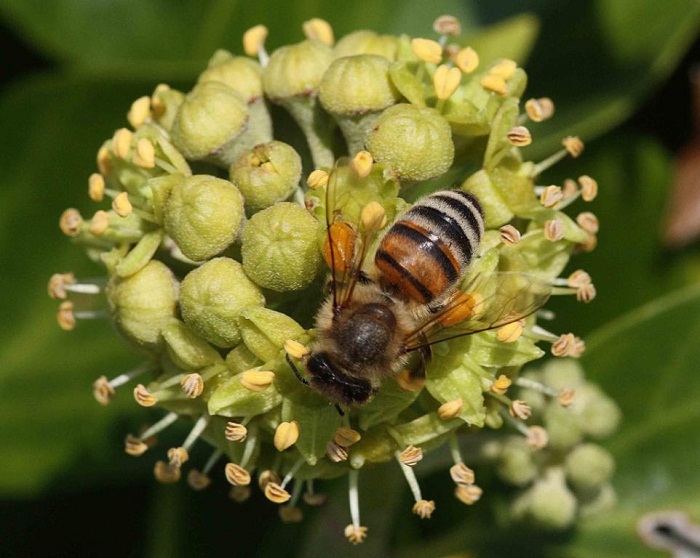
Now we are into October the weather has turned more autumnal although the bees are working the ivy during sunny spells. In fact some hives are working as if there is summer flow so they have a super to collect this last bout of activity. The presence of a super prevents the brood nest from becoming congested with stores and allows the queen to continue laying, albeit at a lesser rate.

Feeding should be about finished by now. Bees are reluctant to take stores down If the weather turns cold so, if some colonies need topping up it is better to do it sooner rather than later.

The next job on my list before winter is to place mouseguards over entrances although I normally wait for the first frost before doing so. Mouseguards can knock off pollen loads from incoming foragers and pollen is vital for colonies while brood is being produced. Do tap the brood box before putting mouseguards in place – otherwise you could be trapping mice in the hive for winter!

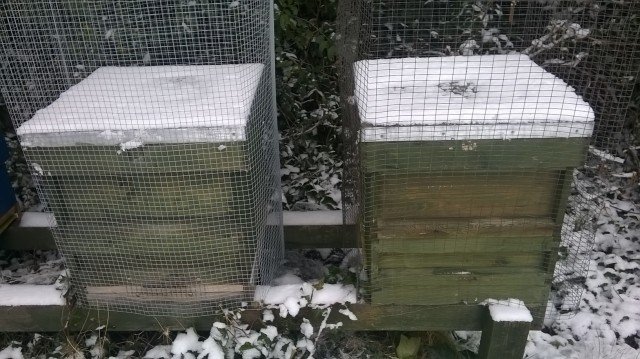
The last job before winter is to wrap hives with wire netting to prevent woodpeckers damaging brood boxes. I am in the process of moving netting to apiary sites in readiness for this tedious job. If the winter is mild we can get away without nets but if there is a cold snap woodpeckers can do a lot of damage in a short time. Trying to put netting in place in bad weather is not high on my list ‘nice’ jobs so I prefer to do it in benign conditions. That way I know colonies are pretty safe until springtime.

As the active bee season is now over I will send out apiary notes every couple of months until spring. Meanwhile, do try to get along to Improver sessions that are held are the county. They are a great way to acquire beekeeping knowledge over the winter in readiness for next the season. (See page 37 of the Yearbook for Improver group leaders.)

Wally Thrale

September Apiary Notes

Our bees are now preparing for winter and it is time for us to make sure colonies are in a good condition to survive the winter.

My hives were all treated for varroa during August and this year I used Apivar. It is important to vary the type of treatment applied each year so that the risk of mite resistance is reduced. If you haven’t treated yet choose a treatment that isn’t temperature dependent. Apiguard is less effective in lower temperatures and can leave many mites in the colony at a time the winter bees are produced.

This coming week I shall finish moving colonies to their winter quarters from sites where they have foraged this summer. One of my main aims over winter is to provide as much shelter for colonies from all winds even if it means placing tens of colonies in one site. However, there must be enough pollen resource for such a site but nectar is less of an issue as the bees will be fed over the coming month. In my experience winter losses are reduced if shelter is provided. Weather presenters tell us of the ‘wind chill factor’ and this applies to bee colonies as well as humans!

Over the coming weeks I shall feed my bees Ambrosia as I find this an easy way to feed bees. It is an inverted sugar so there is less work for the bees when processing it. My aim is to finish feeding by the end of September and preferably before ivy comes into flower. Ivy honey can cause issues for bees if they have too much. It is associated with dysentery and can weaken a colony or cause it to die out. So when a colony has been fed enough syrup I place a super back on the hive to collect any ivy honey the bees may bring in. It is conventional super placing, i.e. brood box, queen excluder, super and then crown board. The super can be removed around mid November and processed but the honey will probably have set at this point. The reason I add the super is to allow space in the brood nest for the queen to lay. If bees bring in too much ivy it could take up too much nest space and thereby reduce egg laying .

If you added several frames of foundation to the brood box earlier in the season check if the bees have drawn them out fully.  It may be necessary to move outside frames inwards by one otherwise the bees may not utilise the outside frames for stores. This means they have less food for winter and could starve next spring.

When feeding with granulated sugar it should be a strong solution, that is 2lbs of sugar to a pint of water. Only use white granulated sugar as other forms are harmful to bees. An easy way to dissolve sugar in bulk is to use a paint stirrer attached to a power drill. Place around 20lbs of sugar in a 5 gallon container and add hot tap water to cover the sugar. Stir with the drill for a minute or two and the sugar will have dissolved sufficiently. When I used granulated sugar in the past I was able to process around 100lbs in about an hour.

Finally, assess colonies and ensure they are queen right and look strong enough to make it through winter. It may be better to unite two weak colonies in the hope that a single one will survive rather than two weak ones die out.

Wally Thrale