Category: Article

September 2024 Apiary Notes from Wally Thrale

To use a footballing term this year has been a season of two halves. Up until the middle of June things looked dire and the prospect of feeding colonies was a serious consideration. But then the weather changed and it became ‘summery’. Reports from various beekeepers suggests there has been a good crop of honey. To use farming parlance ‘the harvest was better than last year but not as good as next!’.

But now we must prepare our bees for winter. Varroa treatment should be well under way if you intend to treat before winter, especially if using Apiguard which is temperature dependent. Around the beginning of September I normally start my winter feeding but carry out a quick inspection of each colony to see if it looks viable. If there are several frames of brood, some of them containing slabs of sealed brood, I consider the colony in good shape. If it looks dubious the best thing to do is unite it elsewhere. If there are a couple of colonies that are like this I unite them leaving the queens in each box. Let the bees decide which one they prefer. This only applies to colonies where there are no obvious signs of disease. It may also be necessary to unite colonies if increase has been made earlier in the year due to artificial swarming. Ideally the old queen should be killed and her brood united onto a hive with a current year’s queen. Younger queens generally survive the winter better.

My preference for feeding these days is to use Ambrosia as mixing large quantities of sugar is very time consuming. This is an inverted syrup whereas bees need to invert sugar syrup which is more work for them. Ambrosia also keeps for at least a year so can be used in the spring if colonies require a top up before nectar is available. The aim is to feed individual colonies as quickly as possible, providing around 20 to 22 kilos of stores for a National hive on a single brood box.  If using brood and a half or a larger brood box then more stores can be provided. But remember to remove the queen excluder if using brood and a half. I’ve seen a queen die because the bees were in the super with the stores but they could not feed the queen in cold weather. If there are frames with just foundation after the artificial swarm process, bees are reluctant to draw comb late in the season if the frame(s) are by the wall. Move the frames with foundation to either side of the nest which encourages bees to draw them. Don’t place them in the centre of the brood nest as nights can become cold in autumn and brood could become chilled.

An important point to bear in mind is not to overfeed as this will restrict comb space for the queen to lay. The winter bees are raised during the autumn months and if brood frames are full of stores there will not be enough bees raised to maintain the colony over the winter.

The Association stocks Ambrosia (or equivalent) so see the latest price list for location of stockists. For autumn feeding I always use syrup not fondant. Fondant is used when the weather is cold, mainly late winter or early spring, as bees won’t process syrup at this time but are happy to tuck into a block of fondant.

My aim is to finish feeding around the end of September as the ivy starts flowering later in the month. Bees don’t seem to overwinter too well if they have a lot of ivy honey in the brood frames. So feeding syrup before the ivy flowers prevents bees storing this honey in the brood box.  After feeding I leave one super on the hive for bees to store any ivy they manage to locate which is then removed before winter.
Mouse guards should be added when the first frost is imminent. Placing them too soon can remove incoming pollen from foragers which is not helpful. It is also a good time to added netting to keep out woodpeckers. Doing this job in midwinter in bad weather is not a pleasant task.

August 2024 Apiary Notes from Wally Thrale

How the weather differs each year. Looking at the notes for last August it was rain we had to contend with causing the cancellation of the Centenary picnic. By mid June this year it looked that feeding colonies would be necessary and the prospect of a summer crop looked remote. How matters can change so quickly. Supers have filled, been extracted and are filling again. And it seems that the honey flow is not over yet but I suspect it will be soon.

Managing nucs this summer has been challenging as they have brought in so much honey they have run out of space for the queen to lay. So it was necessary to remove frames of stores and replace with foundation to provide laying space for the queen. Nucs need checking on a weekly basis to ensure they are not starving, bringing in too much honey or becoming overcrowded. But producing nucs each year is enjoyable and an insurance for winter losses.

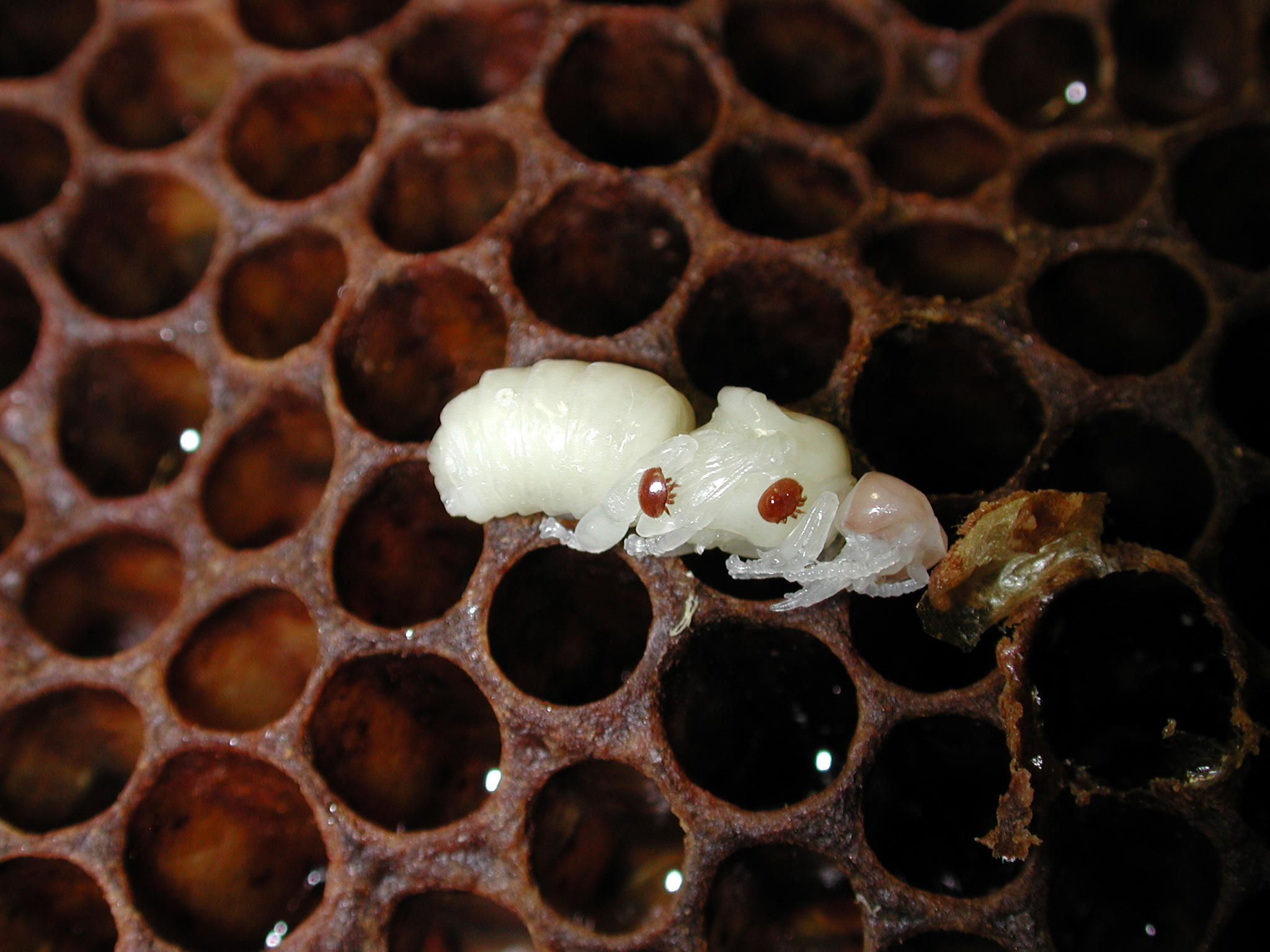
As the honey flow is not over yet I have changed my varroa treatment regime. Originally I decided to use Apistan this year (last year it was Apivar). Because I will not be I a position to remove supers until late this month I have decided to use Formic Pro this year. The reason for this is I want to remove as much of varroa as possible before the winter bees are produced, from September onwards. Using a six week treatment such as Apistan or Apivar does not fit this timescale. These products should be used as early as possible in August. This also applies even more so to Apigurad which requires a minimum temperature to be effective.

Do consider these points when deciding which treatment to use. But it is vital that colonies are treated for varroa otherwise the health of winter bees can be compromised which can then affect winter losses. So do treat as soon as supers are removed and do not treat with honey present. Final point on treatments – don’t use the same product each year, especially with products such as  Apistan and Apivar. The mites can develop resistance over time and make a product useless which is what happened with Apistan some time ago. Ring the changes!

And then onto feeding bees in a few weeks’ time. I normally start at the beginning of September and aim to finish by the end of the month. These days I use an inverted syrup as dissolving large quantities of sugar lost its appeal a long while ago. Inverted syrup feed is easier for the bees to process and it is more concentrated that homemade sugar syrup. It will also keep until next year.

After feeding an empty super is returned to the hive in case there is a heavy ivy flow.

There will be a Zoom session next Tuesday to chat over any of these points as well as anything else you wish to raise. Unfortunately I am not able to attend but John MacDougall tells me he is ok to go ahead with the session. Look forward to seeing you at the next one.

July 2024 Apiary Notes from Wally Thrale

At last the weather has become ‘summery’ and the bees are making er, ‘honey’! Up until a couple of weeks ago I thought there wouldn’t be a summer crop; bees were eating what stores they had and feeding was becoming a consideration. Now supers have filled with the warm sunshine.
Most of my colonies are on four supers to accommodate the bees. But these supers are now quite full and I would like to extract some of them. So to try and force the bees to finish processing the honey in the supers I want to extract, I have left two lighter supers below the crown board and two heavier ones above it. They have been left like this for a few days which allows bees to store fresh nectar in the supers below as they tend not to store it in the supers above. A quick ‘shake’ test with a frame next to the wall to test if honey comes out of the comb confirms the honey is safe to extract. Supers can then be returned to hopefully be filled again.
The poor weather we experienced for quite a while stopped many colonies from swarm preparations but that doesn’t mean swarming is over yet. It is important to inspect colonies for queen cells and carry out an artificial swarm if necessary (see last month’s notes for a couple of methods). Losing a swarm now that the weather has improved and a honey flow taking place means a hive will produce very little honey if any.

Now we are approaching July it is the time when wasps tend to make their appearance around our colonies. Being prepared is better than trying to stop wasps once they have targeted a hive. It is a good idea to reduce entrances down to around an inch or so, smaller than this for nucs. Once wasps have found a way into a hive it is very difficult to stop them. They can easily take out a weak colony or nuc in a short time. They then move on to the next target. Do get the foam ready and apply soon.

Many beekeepers treat for varroa in August which means no honey should be present. Do have your treatments ready to use as some of them are time and temperature critical. If they are not applied as per instructions they are barely effective. This is a waste of money but will also compromise the colony as the winter bees will not be in good condition. Winter bees need to be healthy (and lots of them) for a colony to survive to next spring.

On a different topic I recently wrote an article on rendering wax using a slow cooker. This I find a very effective way to render down spare wax into a block that can then be traded with the Association. Remember that if you want to buy more than 4 packs of foundation you will need to trade the equivalent weight in wax to buy discounted foundation. You can find the article by following the link:
https://bedsbka.org.uk/rendering-wax-by-wally-thrale/

Next Tuesday (2nd July) we will run a Zoom session to talk over any of these points or anything else you may wish to ask. The invitation will be sent out nearer the time.

Finally, it is not too late to make nucs to overwinter and this is something all beekeepers should try to do in case of a bad winter.

June 2024 Apiary Notes from Wally Thrale

Each spring we have weather issues to contend with. Looking back at the previous years we have had: record amounts of spring sunshine; followed by air frosts on most nights during April the next year; then one of the driest April / May periods the following year and this year cold and wet weather. The weather for each of those years made it difficult for bees and beekeeping (except the sunny one!).

But now we are at the height of the swarm season so checking for colonies making queen cells is essential. If colonies have already been artificially swarmed with frames of foundation do check the bees are drawing comb – sometimes it is necessary to rearrange these frames so that all the foundation is drawn by the end of summer. If a colony goes into autumn with undrawn comb they may not have enough space for their winter stores. Bees are less keen to draw comb late in the season so ensure all foundation is drawn by the end of summer.

On the swarming theme, some beekeepers are not sure how best to deal with a colony that has queen cells as there are so many ways to deal with this situation. So here are two overviews – one where the queen is found and the other where the queen cannot be found. Note – for these overviews the original colony with the queen is called the ‘parent’ colony and the new brood box introduced is the ‘artificial swarm’.

  1. a)       Where the queen is marked and can be found.

Locate the queen and cage her and put the cage to one side in a safe position.

Move the parent box away several feet in the apiary and then place an empty brood box (artificial swarm) on the original site so that flying bees will return home.

My preference is to add two frames of sealed brood (remove any queen cells first!) to the artificial swarm from the parent colony and then fill the box with empty drawn frames and foundation. If possible add no more than four frames of foundation. This is why it is important to have spare drawn frames.

Return the queen to the artificial swarm and return the supers here as well.

Now leave one good looking open queen cell in the parent colony with the brood, knocking down all the others.

  1. b)      Where the queen cannot be found. Note this applies only if open queen cells are present; if sealed queen cells are there the queen may have already have left the colony.

Locate a frame containing eggs and young larvae only and knock down any queen cells from this frame.

Place this frame with attached bees in the artificial swarm in the centre of the box. Place drawn frames either side of the frame with eggs and fill the remainder of the box with foundation – but no more than four if possible.

Return the supers to the artificial swarm.

Replace the frame taken from the parent colony with a frame of foundation.

Leave for seven days and then –

Look in the artificial swarm – if there are no queen cells then the queen is probably here and eggs should be present. If queen cells are present select one good looking one and knock down the others.

In the parent colony look for eggs; if they are present then the queen is here and the house bees should have torn down the queen cells. If queen cells are present then select one good looking cell and knock down all the others. Put a drawing pin in the top bar with the queen cell and look again after eight days – the queen cell should have an emerged queen.

A couple of final points. When taking off the spring crop ensure the colony has enough stores to carry on otherwise they may starve especially as the ‘June gap’ is upon us.

Next Tuesday is the next Zoom Improver session for which an email invitation will be sent nearer the time. If you have any concerns or questions please do ask on the day. You can either send a message via the Zoom ‘chat’ function or talk about your question.

The BBKA Asian Hornet Conference 17th February 2024

This conference provided an overview of the effect of the hornet in 2023 and plans for dealing with it in 2024.

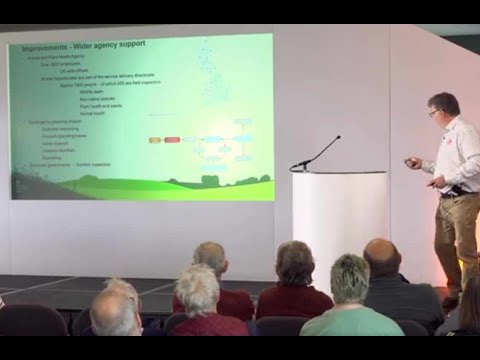
You can view a recording on YouTube here. Best to start from about 9 minutes from the beginning.

Nigel Semmence: ‘An Update from the NBU’
Contingency Planning and Science Officer, National Bee Unit

Martin Smith; eR2 Project Manager: ‘Communication is the key’
An introduction to the way in which we beekeepers fit into the fight against the Asian Hornet.  Following on from the NBU update, this talk will confirm the roles of AH Coordinators and Verifiers and how they appear on the various maps that are now available, both publicly and within the secure eR2 membership environment. It will also outline the way in which a suspect sighting reported by a member of the public via the AH App will be passed as quickly as possible to a beekeeper to follow up.

Kirsteen Thorne;  BBKA Outreach Officer
Kirsteen has previously worked as a journalist, presenter and radio producer for BBC Radio Norfolk and the regional BBC Look East programme. Initially she will be focusing on raising the profile of the threat of Asian Hornet and implementing the BBKA outreach plan.

Alastair Christie:  ‘An update on Jersey and what BBKA could learn from the Jersey Experience’ 
Alastair Christie works for the Environment Department with the Government of Jersey as an Invasive Species Officer. He has been in post as Jersey’s Asian Hornet Coordinator since 2019 managing the control programme and working closely with the volunteers who carry out much of the work. As such he has built up considerable experience of the invasive Asian hornet (Vespa velutina nigrithorax) and has seen how the hornet landscape has changed over the years, and how their techniques for controlling them have evolved and been refined. In 2023 they have found a record 339 nests, up from 174 in 2022. In his lecture he’ll bring you up to date on what happened in 2023 in Jersey, some of the lessons that others can learn.

Jackie Thomas of Dover and District BKA: “An update from Kent”

Jackie relates the experience and lessons learned by DDBKA in 2023. DDBKA have developed a simple and sustainable way of utilising members to perform widespread monitoring.


2023 Honey Show Results

A message from the Honey Show secretary, Sue Lang:

Thank you to everyone who entered/helped at the Honey Show and Festival on Saturday 7th October at The Discovery Centre, Luton.
It was a brilliant day, lots of great quality entries for the honey show, and lots of people through doors for the festival. The stalls were swamped and all the honey was sold. There was also great interest in the Yellow Legged Asian Hornet stand. This event is only successful because of all the people who give up their time to support the association, so Thank You again.

I’m very pleased to report that Bedfordshire came 2nd this year in the Federation Cup, hosted by the National Honey Show. Thanks to the class winners at Bedfordshire’s honey show, who kindly allowed their winning entries to be put forward (Wally Thrale, Phil Archer, Caroline Luxford, Sue Lang)”

Results and Placings

Trophies and Awards

National Honey Show Federation Cup Beds entries and places


The 2023 Honey Show was managed using the following:

Honey Show Schedule 2023 – details and description of entry classes

Rules for 2023 – please make sure you follow these rules to ensure that all your hard work is judged!

Labelling Exhibits – details of how to label your exhibits

Recipes – these are the recipes that should be used for our show (note they are not the National Honey Show recipes)

Awards for 2023 – details of the awards given for various classes

Beds BKA Honey Show Entry Form 2023 – all entries must be received by midnight 1st October 2023


November 2023 Apiary Notes from Wally Thrale

The main reason for these notes is to highlight to members the dramatic number of Asian hornet (AH) nests discovered this year. So far the number of nests located and destroyed stands at 71. That figure is far higher than all nests found in previous years combined. It now looks as if some nests may have produced queens that will overwinter and start the process next spring. Trustees are very concerned about this matter as many beekeepers still seem to be unaware of the seriousness of the problem.

There will be a meeting on Tuesday 5th December at Flitwick village hall to inform members about the problems AH will cause us. Beekeeping on the continent has been seriously impacted by AH and we all need to understand how we should monitor for AH and how to deal with AH if they become established.

More details of this event will be sent to members soon. Please do make every effort to attend this meeting. We must be vigilant from now on – we can’t reply on bee inspectors locating and destroying all AH nests. We all need to understand the gravity of the situation.

We will also cover Asian hornets on the Training day at Flitwick village hall on Saturday 27th January 2024. Other topics for the day are:
Assessment of approved varroa treatments;
Using honey as an ingredient;
Overview of commercial brood boxes;
And surviving winter – for bees!
This event is available to sign up on Webcollect (members only). Follow the link:

https://webcollect.org.uk/bedsbka/event/improver-training-day/

Now for the apiary Notes. Although there is little to do with our bees at this time of year I thought a little reminder of jobs that need doing before winter might be of help.

Feeding syrup should have finished a while ago. If colonies become light then feeding with fondant will be necessary. The Association has stocks of fondant so contact your local stockist to check for availability.

All my colonies now have a 50mm piece of insulation (Celotex) above the crown board and below the roof. This should help retain heat in the brood box as it is exactly what we do in our homes. Now that pollen foraging is minimal mouse guards should be put in place. At the same time wire netting is wrapped around the hive to keep woodpeckers away during cold spells.

It is then a matter of keeping an eye on colonies over the winter and checking they have sufficient stores, especially as we approach spring, which is some time off.

Winter is a good time to carry out routine maintenance of kit that is not needed until active beekeeping starts again. So queen excluders are scraped clean and edges treated with a heat gun. Supers and the frames are scraped and just generally tidied up. Personally, I prefer to treat external surfaces of hive parts (e.g. Cuprinol, Barretine etc) on a regular basis to prevent the wood decaying. Hives properly looked after will be serviceable for decades.