Category: Uncategorized

March 2022 Apiary Notes from Wally Thrale

he main purpose of the notes this month is to promote the Training Day we are running at Houghton Conquest village hall on Saturday 19th March, starting at 10.30am. The day will finish at 3pm with a Q&A session after the last talk where members can pick the brains of the assembled panel.

Note – please bring your own lunch and refreshments to allow speakers etc to concentrate on the talks and running the day.

If you wish to attend please do sign up via Webcollect so that we have a rough idea of numbers. The hall is a reasonable size but we mustn’t exceed the fire safety limit. Or you can drop me an email at w.thrale@ntlworld.com to let me know you want to attend.

We have invited Peter Folge, our seasonal bee inspector and a very experienced beekeeper, to talk about the do’s and don’ts of beekeeping. As Peter visits so many beekeepers during the season I’m sure he has seen a wide variety of beekeeping practices which will be interesting to hear about. Hopefully we can then prevent some pitfalls in our beekeeping.

Topics for other speakers are:

Colin Hall on using nucs when carrying out an artificial swarm.

Gill Brewer talking on conventional artificial swarm control – just to remind us how to go about this.

Mike Niemann on raising several nucs from a colony that has good characteristics using its queen cells.

John Macdougall on using mating nuclei and adjusting a refractometer.

Richard Smith & Jenny Tysom demonstrating a wax steamer (the Association has 3 steamers around the county which can be loaned to members).

Richard Smith on wasp precautions. We so often hear of beekeepers losing colonies to wasps in the summer which can be prevented.

Wally Thrale showing a super designed for round sections and how to get the bees to work the super.

Over lunch I hope we can show how to make wax wraps and candle making.

NOTES
So for March do check colonies have enough stores as some boxes are becoming light, especially National hives. If a colony feels light then feed it some fondant or syrup. As the days are slowly becoming milder bees will accept syrup from now on. Better to be safe than sorry as there are several weeks before we can expect a honey flow.

Also remember to remove the mouse guards during this month. Bees are already bringing in pollen when the weather allows. Colonies are starting to build up now and they need lots of pollen. Mouse guards can knock pollen loads off incoming bees so best to remove them soon.

August 2021 Apiary Notes from Wally Thrale

Apologies for the lateness of these notes.  Last month I mentioned that varroa treatment should be carried out in August, especially if temperature sensitive. The link below shows an overview of several varroa treatments I have used with some pros and  cons for each one. Rather than reproduce it here you can view the notes from last year by following the link:

https://bedsbka.org.uk/article/august-2020-apiary-notes/

The beekeeping season has finished now and the weather has been the poorest one I can remember in over 30 years that I have kept bees. The best description for the season perhaps is ‘challenging’ with poor honey yield, problems with queen mating and generally difficult conditions for beekeeping. Yesterday I wanted to remove honey but it was too windy and cold to do so – and this is the middle of August!

Enough of grumbling and onto to what needs doing. As already mentioned I am trying to remove any honey that is available in supers for me to extract but only if the bees have enough stores in their brood frames. If not I will remove the honey just before commencing feeding otherwise bees will starve.

Wasps area problem in some parts of the county so entrances should be reduced to a small gap so bees can defend themselves easier. Putting out wasp traps helps to reduce the wasp population although removing dead wasps daily can become tedious.

Once honey is extracted I return the supers over the crown boards of a few colonies for the bees to clean out. Supers shouldn’t be stored ‘wet’ as they will go mouldy over winter. If stored wet they are an attraction for local bees and wasps which results in a lot of dead insects, especially if left open in the apiary. Super comb is a valuable commodity and should be looked after. There is an article in the Good Practice section of the website explaining how to store supers. Follow the link below:

https://bedsbka.org.uk/membership/good-practice/storing-supers/

Before winter feeding I carry out a quick inspection of each colony to see if it looks viable. If there are several frames of brood, some of them containing slabs of sealed brood, I consider the colony in good shape. If it looks dubious the best thing to do is unite it elsewhere. If there are a couple of colonies that are like this I unite them leaving the queens in each box. Let the bees decide which queen they prefer. This only applies to colonies where there are no obvious signs of disease.

In a couple of weeks I shall start feeding and my preference these days is to use Ambrosia. Mixing sugar syrup for many colonies has little appeal for me.  Ambrosia is an inverted syrup whereas sugar syrup the bees need to invert it which is more work for them. Ambrosia also keeps for at least a year so can be used in the spring if colonies require a top up before nectar is available. The Association stocks Ambrosia so see the latest price list for location of stockists. For autumn feeding I always use syrup not fondant. Fondant is used when the weather is cold, mainly late winter or early spring, as bees won’t process syrup at this time but are happy to tuck into a block of fondant.

My aim is to finish feeding around the end of September as the ivy starts flowering later in the month. Bees don’t seem to overwinter too well if they have a lot of ivy honey in the brood frames. So feeding syrup before the ivy flowers prevents bees storing this honey in the brood box.  After feeding I leave one super on the hive for bees to store any ivy they manage to locate. This can be removed when it has finished flowering and some people find it a tasty honey. It’s a little like Marmite – people love it or hate it.

Regards
Wally

May 2021 Apiary Notes from Wally Thrale

Queen Bee
What a contrast between this spring and last year’s. Last year we had record sunshine amounts – this year record air frosts during April. A cold dry April followed by a cold wet May – not a good combination. I cannot remember such a bad start to the beekeeping season as this one.

However, colonies on OSR have built up strongly but haven’t brought in much of a crop as yet. Some sunny warm days would change all that though. Even so, bees are thinking of swarming; I have collected a couple of swarms locally and carried out a few artificial swarms on my stronger colonies.

As there have been only the occasional days to carry out inspections I have concentrated on my stronger colonies as they are more likely to produce queen cells. As the forecast does not offer much hope for warmer days I am carrying out a pre-emptive artificial swarm on strong colonies that do not yet have queen cells. Most of my queens are marked and clipped which makes carrying out an artificial swarm much easier. When the queen is easily located the artificial swarm process can be carried out fairly quickly. Clipped queens also give me a few days grace when inspections are not possible due to the weather.

As I do not have enough floors and roofs to artificially swarm all my hives I sometimes place the parent brood box on the topmost super of the stack. So the process is similar to a conventional artificial swarm – the box with the brood is moved to one side and the queen placed in a cage. A new brood box is placed on the original location and a couple of frames containing mainly sealed brood and nurse bees from the parent colony are placed in the new box. If possible it is better to add at least a couple of drawn empty brood frames in the new box followed by frames with foundation. Lastly the queen is released in the new box. This format allows the queen to continue laying and will provide a supply a nurse bees to cater for her in the coming days. Supers are returned along with the crown board. However, the feed holes in the crown board are blocked with small pieces of plywood to prevent the two colonies from mixing. A shallow eke is added which has a cutout which acts as an entrance. The eke is placed such that the entrance is the opposite direction to that of the floor. The brood box containing the brood is placed on the eke, followed by another crown board and then the roof. A queen excluder and super can be placed over the brood box as an option.

This arrangement can be left in place until the new queen comes into lay. If the aim is to make increase there are now two laying queens. If no increase is needed the old queen can be killed and the two brood boxes united as per a conventional uniting process. As I keep saying do make some nucs to over winter – many people have asked for nucs this spring which shows more beekeepers should consider making some. When a new queen is available following a successful artificial swarm then it is time to consider placing of the queen in a nuc along with a couple of frames of sealed brood and attendant bees.

The benefit of the above method is that it saves a floor and roof. The downside is the top brood box could become heavy as bees start foraging. This can be a problem if the bottom brood box brings in a lot of nectar and needs more super space. The bottom brood box will also need attention if there are several frames with foundation as bees are often reluctant to draw comb when there are plenty of super frames available above. So it is often necessary to move a frame or two with foundation next to the brood nest to encourage the bees to draw them, otherwise the queen will not be able to lay to her capacity. The last point to make here is the whole stack can become quite tall and require two people to dismantle it. This comes down to a honey flow or lack of. All weather dependent I’m afraid.

We are now entering peak beekeeping time even if the weather isn’t so do be prepared and have spare kit available. Bees often catch us out – they still work to their agenda!

Regards
Wally

Swarming Season

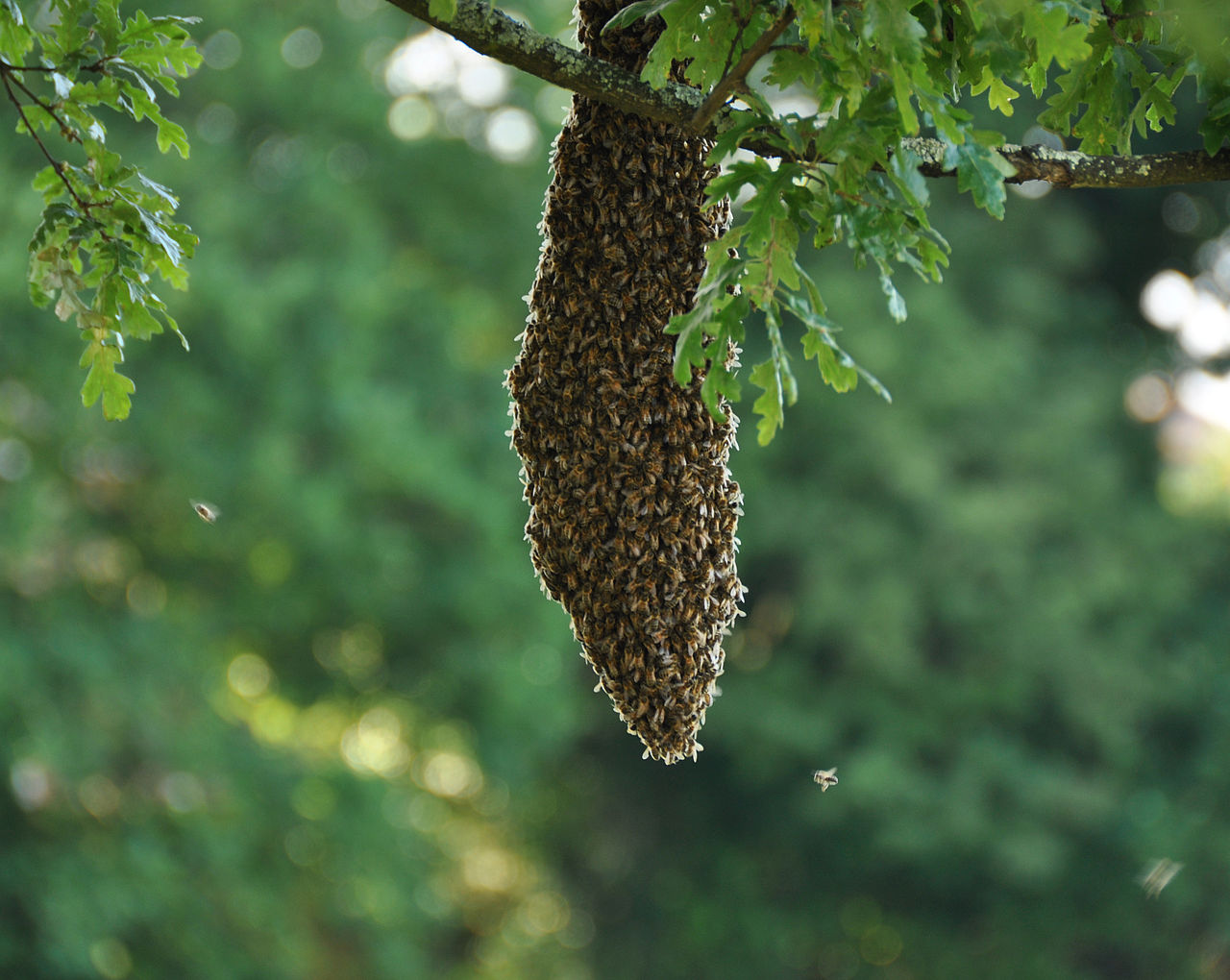
It’s that time of year again when we can expect to see honey bee swarms. Hives are beginning to get stronger and may soon decide to swarm. We have already seen some swarming and the recent warm spell of weather will contribute to this tendency.

If you are a member of the public and suspect you have a honey bee swarm our volunteer swarm collectors may be able to help. See our pages on insect identification and swarm collectors for assistance.

2019 Beekeeping Courses Announced

Bedfordshire Beekeepers are pleased to announce details of our 2019 beginners courses.

Course:                 An Introduction to Beekeeping

Suitable for:        Complete beginners and new beekeepers.

Cost:                      £60 for the whole season.

Two locations:   Luton or Bedford

Luton

Theory sessions indoors at Stockwood Park Discovery Centre, for six Sunday mornings, starting 3rd March 2019, 10:30 to 12:30.

Followed by practical sessions outdoors at Stockwood Park Training Apiary every Sunday morning April to September.

Bedford

Theory sessions indoors at Moggerhanger Village Hall, six Tuesday evenings, starting 5th March 2019, 19.30 to 22:00.

Followed by practical sessions outdoors at Priory Country Park Training Apiary every Sunday morning April to September.

More details can be found in our Events listing

To book a place go to our booking page

To find out more about beekeeping have a look at our Is beekeeping for you? page

Honey Bee Swarms – Information for the Public

Honey Bee Swarm

It’s that time of year again when we can expect to honey bee swarms. Following a fine start to spring many colonies made a great start in building up their strength and we quite expected early swarming. The un-seasonal weather of the last couple weeks however has put a hold on things and although we have seen some swarming, not to the extent that we expected.

The forecast is now looking better for the coming days so we can expect to more swarms of honey bees. If you are a member of the public and suspect you have a honey bee swarm our volunteer swarm collectors may be able to help. See our pages on insect identification and swarm collectors for assistance.