Category: Winter Talk

Online Talk – Rational Varroa Control by Professor David Evans

Don’t miss out! Get your free ticket for another talk by one of our favourite speakers – Prof David Evans. Click here to get a ticket:

Varroa remains the greatest threat to bees and beekeeping. The mite, and the viruses it transmits, are responsible for most overwintering colony losses. To avoid these mite levels must be minimised. This presentation discusses some of the science behind why Varroa and viruses are a threat to our bees before moving on to practical beekeeping considerations including how and when to control Varroa in your hives. Many beekeepers treat at the wrong time of the season, or use the wrong treatment, for maximal effect. In addition to a late summer and midwinter treatment (which should be all that are needed for successful Varroa management) the opportunities to treat in the middle of the season, the importance of managing Varroa in swarms and the strategic, landscape-scale, management of Varroa are also discussed.

DIY For Beekeepers – an online talk by Professor David Evans

You can register for the talk at https://www.eventbrite.co.uk/e/480906322757

David says:

This talk covers topics as diverse as recycled For Sale signs, the number of jars of honey it takes to pay for a Toyota Hilux (and how to move hives slightly more economically), foundationless frames and wasp-resistant hive entrances. It is an entertaining look at some of the things that either aren’t available commercially, or that can be built at home both better and cheaper. None of the items discussed require any specialist, expensive (or even power) tools . . . though a pizza cutter will come in useful. Several of the items described have won prizes in beekeeping shows (for readers of The Apiarist, unfortunately not for me). This is the ideal talk for late autumn or early winter when beekeepers have a little more time on their hands … it is intended to convince you that the bees don’t need fancy woodwork, and to inspire you to build something yourself.

David Evans (The Apiarist https://theapiarist.org)

David Evans is Emeritus Professor of Virology in the School of Biology, University of St. Andrews. His research interests included the replication and evolution of human and animal viruses, and the biology and control of both Deformed wing virus (DWV) and Chronic bee paralysis virus (CBPV) of honey bees.

David is an enthusiastic beekeeper – an activity that pre-dates his research on honey bee viruses by several years – and a member of Fife Beekeepers, the East of Scotland BKA and Lochaber BKA. He runs about twenty colonies and is particularly interested in queen rearing and ‘pottering in the shed with bits of wood and a nail gun’.

His interest in DIY for beekeeping resulted in a regular column in the Warwick and Leamington Beekeepers newsletter Bee Talk which, over time, evolved into his personal beekeeping website The Apiarist. On this he covers topics as diverse as Varroa management, responsible mentoring, the price of honey and practical waspkeeping. New posts appear every Friday afternoon and he regularly discusses recent scientific advances on the biology of honey bees. The popularity of the website has resulted in numerous invitations to talk at local, national and international beekeeping meetings.

David now lives on the remote west coast of Scotland in one of the few remaining parts of mainland UK that is Varroa free.

You can register for the talk at https://www.eventbrite.co.uk/e/480906322757

Winter Talk

Pete Folge, our Seasonal Bee Inspector (SBI) is coming along to talk us on his role and his experience as a beekeeper. Peter runs over 50 colonies of his own as well as inspecting bees every day.

Wally our Secretary says:

“How these inspectors manage to do so much beekeeping in a week is beyond me. Personally, I look forward to a visit by the Bee Inspector (quite different from a tax one) as I always learn something from them. They go through hives looking for brood disease. If there is disease I am not confident I would always find it so to have an expert do this for me is very re-assuring. Fortunately to date no serious brood disease has been present in my hives. During inspections I have the opportunity to ‘pick their brain’ which I find so useful.

You too can have this opportunity if you come along to listen to this talk. It will be a practical one and, beginners and more experienced beekeepers will gain from it.”

Please do try to come along.

Swarm control without 9 day checks

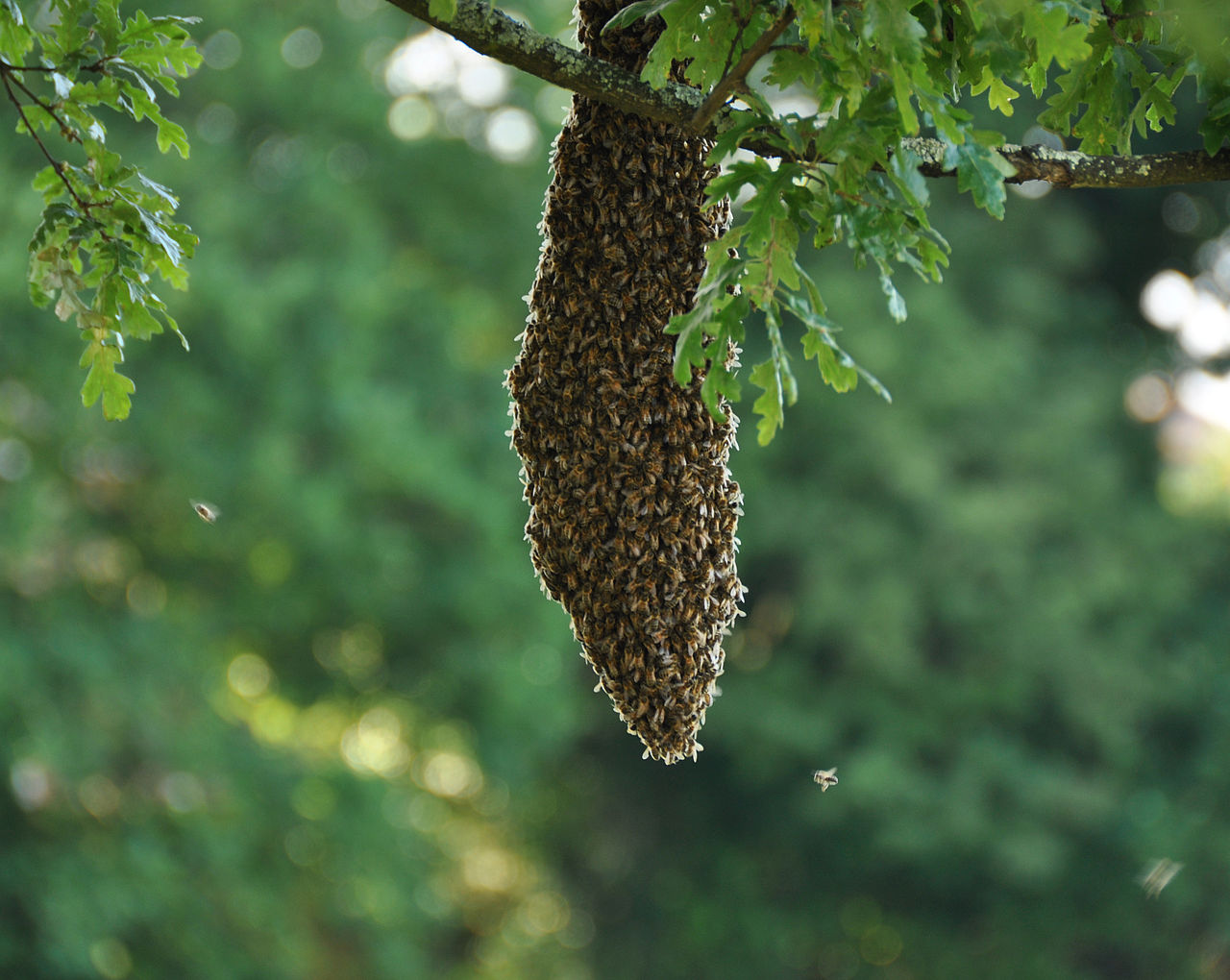
Honey Bee Swarm

Talk at Flitwick Village Hall for Bedfordshire Beekeepers 15/10/15

by Ged Marshall

  • Ged, his daughter and a summer student run 250 colonies and raise 1500 queens a year.
  • They are based at Oakfield Honey Farm at Steeple Claydon, near Buckingham.
  • They aim to produce 10 tons of honey per year.
  • They also take colonies to pollinate orchards, charging £60/colony.

Queens

They import Danish Buckfast breeder queens and raise daughter queens from these. They import further Danish Buckfast queens as drone producing colonies which are placed either side of their mating apiary. It is hoped that the first generation queens produced will not be prone to swarming, and will have a high supersedure rate. They use 14X12 hives. Spare queens are overwintered in Apidea nucs with supers.

Disease

They do a full disease check in April

Combs from any dead colony are burned, boxes are scorched.

Swarm prevention

They re-queen colonies where the queen has done 2 full seasons. Usually in August or September

Swarms collected during the season are also re-queened at this time.

Supers are added once combs in the previous super are covered in bees.

Empty supers are added over a cover board with the holes open, encouraging bees to fill below the cover board first.

Empty supers are added directly above the brood nest, to give the bees space, to try and prevent swarming.

In April and May combs of sealed brood with bees are removed from strong colonies to reduce swarming, they are replaced with sheets of foundation put in the centre of the brood nest of strong colonies.

These combs can be used to boost colonies for queen rearing or to make up nucs, or to boost medium sized colonies to get a strong honey producer. They will not be used to boost small colonies as small colonies will probably be diseased.

Swarm Detection

They don’t have time to look in brood chambers from May – September.

Swarm control

Always check the strongest colony first for swarming. Smaller colonies are less likely to swarm.

If a colony is found to have swarm cells, the queen is killed and 2 cells are left, or 2 chosen cells are given. The cells selected will be the oldest cells possible to get a mated queen as soon as possible. The 2 cells chosen will be side by side so one queen will find and kill the other.

Queenless?

Colonies which appear queenless are either given a test frame or fed to see if this stimulates a queen to start laying.

Bait Hives

Box with an empty frame (no foundation) with a drawn comb on each side. (Wax moths find the gap too drafty)

Or a complete box of comb.

Bait hives place as high as possible, but somewhere they can be easily lifted down when full of bees.

The highest place is often the tallest hive in the apiary.

Swarms

The first sunny day after a spell of rain is spent collecting swarms from hedgerows around apiaries.

Swarms are hived and then moved >3 miles. This means they will not have nest sites in mind and are less likely to abscond. A queen excluder may also be put under a swarm to prevent it absconding.

Queen Introduction

A one day delay between removing the old queen and introducing the new queen will aid acceptance.

To see if bees are likely to accept a queen, lay the queen cage (with the tab on) on top of the cover board hole. Return in 1 or 2 days. If the bees are licking the queen, break off the tab.

Introduce a queen and leave the colony alone for a week, otherwise the queen may be killed. After a week look for eggs, when you see eggs, shut the hive.