| The season in coming to its end soon. Before I took up beekeeping I was told that the end of July signalled the end of the season around here which surprised me. However, after becoming involved with bees there is so much more awareness of the natural environment and flowers in particular.
So before long we need to consider taking away supers for extraction when there is no more honey flow. This becomes quite obvious by looking at the entrance as there will be little flying activity. In fact we should always look at the hive entrance as it gives an indication of the state of a colony. A little reminder when taking off supers – place the roof on the ground upside down and stand supers on it. Supers should never come into contact with the ground for hygiene reasons. My supers are always stored ‘dry’ and by that I mean I return them to colonies for the bees to clean out, placing them above the crown board. When the bees have finished their work I store them in a barn to over winter. At the end of the season there are often super frames that are not capped over as the bees are waiting or hoping for another nectar flow. By having local knowledge of the local flora we will know if another flow is likely or not. It is best to leave supers on the hive for a few days when a flow has finished to allow time for the bees to ripen the latest batch. Uncapped frames can be extracted but do the ‘shake’ test first. Hold the frame firmly with one side facing downwards and give a good shake. If no honey falls out it is safe to extract the frame. If honey does fall out put these frames back into a separate super and return to the bees for a few days, where they will finish ripening the honey. To remind you, the Association has several extractors around the county which can be borrowed at no cost (see p53 of the Yearbook). Obviously they may be in demand around early August so be aware that you may have to wait a little while. Many beekeepers treat for varroa in August which means no honey should be present. Some treatments, such as Apiguard, require warm daytime temperature to be effective. The efficacy is much reduced if treatment starts in September. More on varroa next month. In a normal season wasps start to become a problem around now. Due to the very poor weather we have experienced this year I think wasps haven’t built up to significant numbers yet. The occasional one has appeared on spare kit in my garden so they seem to be behind the curve. However, if they start attempting to gain entrance to a hive it is important to reduce the hive entrance to around an inch to allows bees to defend themselves. Once wasps start attacking a colony it can soon be taken out as bees seem to lose the will to fight off the intruders. Finally, it is not too late to make nucs to overwinter and is something all beekeepers should try to do in case of a bad winter. I have deliberately made a couple of colonies queenless by moving the queen and a couple of frames of brood with bees into a nuc. This nuc was then placed in another apiary in order to stop flying bees returning home. Two pieces of wood were placed on the top brood bars of the queenless colony in order to leave a gap of about 1.5 inches. A frame with eggs from this colony was placed flat on these pieces of wood, the wood allowing space for building queen cells. A shallow eke of around 3 inches deep is needed to accommodate the frame. Note that two of the sides of the eke need thin slats so that the frame can fit within it. To date the bees have raised several queen cells pointing downwards and hopefully can be removed with a sharp DIY blade in the coming days. It will be a matter of cutting out the cell but well away from the base so as not to damage it. The removed queen cell is then placed between two frames in the nuc that was made up a couple of days earlier. Just a note on why the frame was placed horizontally on the brood frames. Bees build swarm and supersedure queen cells in a vertical fashion as it protects the developing queen’s abdomen which is delicate. The cells built as described above are obviously emergency ones but placing the frame flat over the top bars simulates the normal queen cell production process. The Association website has an article on how to make up a nuc. Follow the link: https://bedsbka.org.uk/article/nucs-and-how-to-use-them-effectively/ Regards Wally |
Author: content_editorial
June 2021 Apiary Notes from Wally Thrale
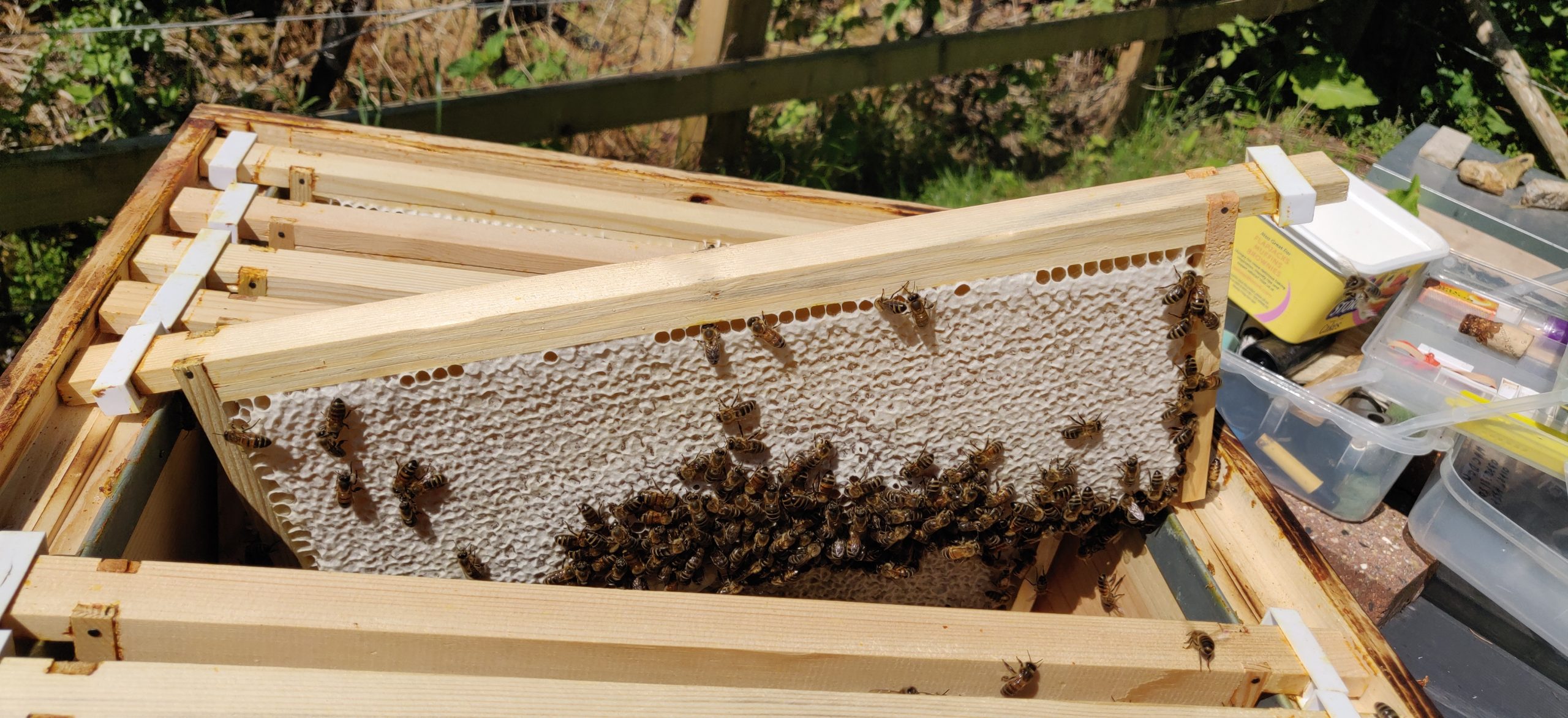
What a difference good weather makes for our bees. In my May notes we were enduring a very wet month and very little honey brought in. Now after a spell of warm weather bees have been very busy and supers are filling. Even though May was cold and wet bees made swarming preparations and, as soon as the weather improved, swarming started in earnest such that I was not able to artificially swarm all colonies that needed it.
This is where clipping a small part of a queen’s wing really helps. It doesn’t stop swarming but it can buy a few days grace. Clipped queens leave the hive but fall to the ground whilst the swarm settles somewhere nearby. When they realise the queen is not with them they either return to the hive or find the queen. She often makes her way under the floor of the hive so my first check is to look under the hives before carrying out inspections as I have found many swarms here.
On the topic of swarming I’m sure I read at some point that peak swarming time is when lupins are in full bloom. This was the case in my area this year and I shall watch lupins next year and be ready to carry out artificial swarming.
Carrying out an artificial swarm is a good time to introduce frames of foundation to replace old comb. However, bees are often reluctant to draw out these frames and sometimes they need to be ‘forced’. By this I mean placing one frame of foundation between frames of brood. This is all dependent on the prevailing conditions and the strength of the colony. So, if the following conditions are satisfied I will place a frame of foundation between each frame of brood:
a) Night time temperatures are warm – as they have been for the past couple of weeks.
b) The colony has built up strongly and there are plenty of bees to look after the brood.
c) There is a honey flow on thereby allowing bees to draw out the foundation.
Repeat the process if necessary 7 to 10 days later.
Some further thoughts on the above. I do not split frames of brood early in the season. The weather in April and May this year is a good case in point – it was far to cold so the brood needed to be kept together.
For me the colony is reasonably strong when there are a couple of supers or more with a lot of bees. Plenty of bees means they will come down from the supers to tend the brood if needed.
In my experience bees draw comb from ‘income’ and not ‘capital’. By this I mean that incoming nectar is used to produce wax rather than any honey that is stored in the supers or brood frames. If there isn’t a nectar flow it may be necessary to feed syrup but be careful if honey is present in the supers.
It is good practice for frames of foundation to be drawn during the summer so that they are ready for use when feeding starts. Bees are not very keen to draw frames later in the season which means they may not have enough drawn comb to store the syrup. They could then go into winter underweight which will result in problems for the colony later on.
A final thought. Now is a good time to make up nucs. The recent survey showed that a lot of people do not over winter nucs. Some beekeepers had heavy losses last winter so having a nuc or two is good insurance. Having used polynucs for a few years now I find that bees tend to do well in them. Bees transferred from a polynuc to a full hive in early spring can build up quickly and produce a good honey crop.
May 2021 Apiary Notes from Wally Thrale

| What a contrast between this spring and last year’s. Last year we had record sunshine amounts – this year record air frosts during April. A cold dry April followed by a cold wet May – not a good combination. I cannot remember such a bad start to the beekeeping season as this one.
However, colonies on OSR have built up strongly but haven’t brought in much of a crop as yet. Some sunny warm days would change all that though. Even so, bees are thinking of swarming; I have collected a couple of swarms locally and carried out a few artificial swarms on my stronger colonies. As there have been only the occasional days to carry out inspections I have concentrated on my stronger colonies as they are more likely to produce queen cells. As the forecast does not offer much hope for warmer days I am carrying out a pre-emptive artificial swarm on strong colonies that do not yet have queen cells. Most of my queens are marked and clipped which makes carrying out an artificial swarm much easier. When the queen is easily located the artificial swarm process can be carried out fairly quickly. Clipped queens also give me a few days grace when inspections are not possible due to the weather. As I do not have enough floors and roofs to artificially swarm all my hives I sometimes place the parent brood box on the topmost super of the stack. So the process is similar to a conventional artificial swarm – the box with the brood is moved to one side and the queen placed in a cage. A new brood box is placed on the original location and a couple of frames containing mainly sealed brood and nurse bees from the parent colony are placed in the new box. If possible it is better to add at least a couple of drawn empty brood frames in the new box followed by frames with foundation. Lastly the queen is released in the new box. This format allows the queen to continue laying and will provide a supply a nurse bees to cater for her in the coming days. Supers are returned along with the crown board. However, the feed holes in the crown board are blocked with small pieces of plywood to prevent the two colonies from mixing. A shallow eke is added which has a cutout which acts as an entrance. The eke is placed such that the entrance is the opposite direction to that of the floor. The brood box containing the brood is placed on the eke, followed by another crown board and then the roof. A queen excluder and super can be placed over the brood box as an option. This arrangement can be left in place until the new queen comes into lay. If the aim is to make increase there are now two laying queens. If no increase is needed the old queen can be killed and the two brood boxes united as per a conventional uniting process. As I keep saying do make some nucs to over winter – many people have asked for nucs this spring which shows more beekeepers should consider making some. When a new queen is available following a successful artificial swarm then it is time to consider placing of the queen in a nuc along with a couple of frames of sealed brood and attendant bees. The benefit of the above method is that it saves a floor and roof. The downside is the top brood box could become heavy as bees start foraging. This can be a problem if the bottom brood box brings in a lot of nectar and needs more super space. The bottom brood box will also need attention if there are several frames with foundation as bees are often reluctant to draw comb when there are plenty of super frames available above. So it is often necessary to move a frame or two with foundation next to the brood nest to encourage the bees to draw them, otherwise the queen will not be able to lay to her capacity. The last point to make here is the whole stack can become quite tall and require two people to dismantle it. This comes down to a honey flow or lack of. All weather dependent I’m afraid. We are now entering peak beekeeping time even if the weather isn’t so do be prepared and have spare kit available. Bees often catch us out – they still work to their agenda! Regards |
April 2021 Apiary Notes from Wally Thrale
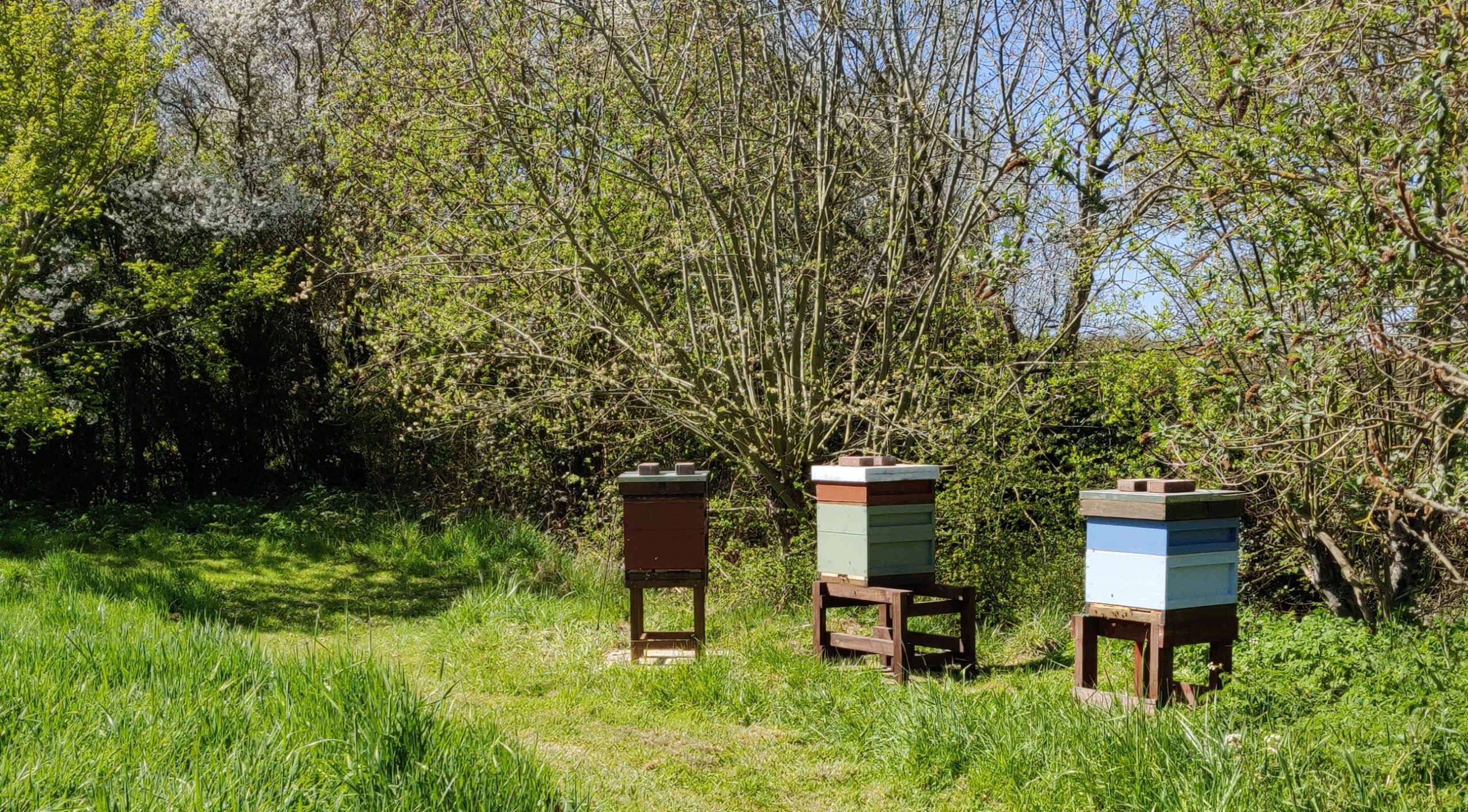
There has been the occasional warm day over the past weeks that allowed inspections. For the first inspection of the season my main priority is to find the queen, clip and mark her. When bees are producing queen cells it is normally easy to find a marked queen. Carrying out an artificial swarm does take time and often several colonies are at the same stage, each taking a period of time to deal with. As marked queens are much easier to find it saves time during this process. Having a clipped queen does not stop swarming but it ‘buys’ me a few days if the weather prevents regular inspections. Swarms normally settle nearby to their home hive and check that the queen is with them. If she isn’t the bees return home sometimes finding the queen. It is not unusual to find a swarm under the floor of the parent colony and I check the floor first before opening a hive during swarming time.
Last spring we were basking in record amounts of sunshine and the bees took advantage of the good weather. This spring is so different; in fact I cannot remember the last time April has been so cold. The forecast for next week shows a small improvement but with the potential to cool down next weekend. So how are the bees coping with weather?
Well when the weather allows bees are bringing in pollen and they will be increasing the amount of brood. My stronger colonies concern me as they are more likely to die out from starvation as they have so many mouths to feed. Normally I top up a few colonies during spring but this year I find that feeding is needed much more than usual. My bees have happily taken down syrup for quite some time now so there shouldn’t be a problem using syrup rather than fondant. A lot of my bees are on OSR but are not able to work the crop yet – perhaps the cold conditions are holding back flowering so hopefully we will have better foraging weather before too long.
When the weather finally improves bees will work hard and we need to be ready for when this happens. Now I can use my vehicle to access my sites that are on farmland I shall move spare supers to each apiary along with empty hives in preparation for artificial swarms. This weekend I made up brood frames with foundation in readiness for comb replacement and artificial swarming. On the top bar I write the year number so I know how old frames are in the box; the oldest ones are replaced when the weather allows.
Do enjoy your beekeeping for the upcoming season. There will be fine weather before too long so do ensure you are prepared. Finally, if you haven’t produced nucs before do consider making some up to overwinter. Nucs are a great insurance for winter losses.
Regards
Wally
March 2021 Apiary Notes by Wally Thrale
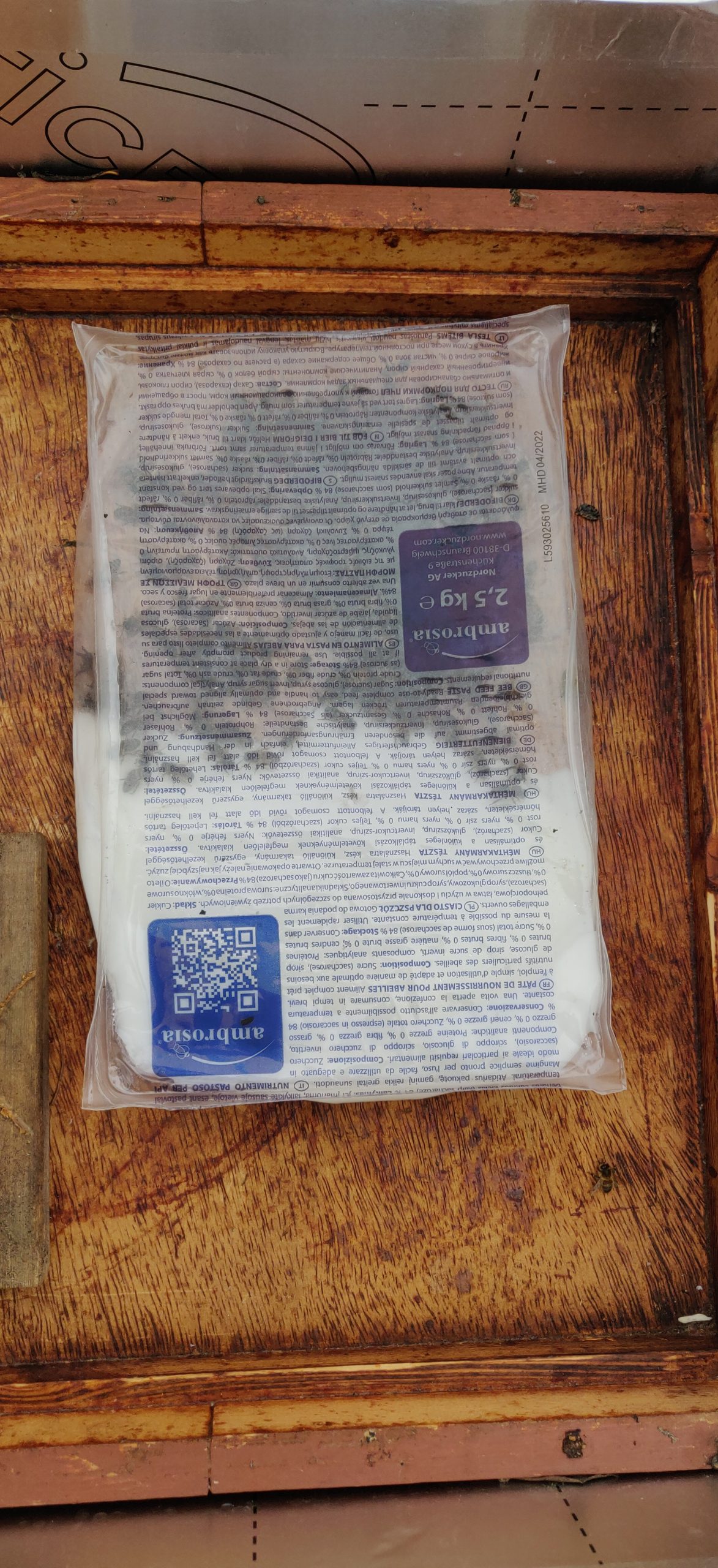
The active beekeeping season is just around the corner and it is surprising how suddenly it starts. As we’ve seen recently, our weather has dramatic swings. Earlier this week was spring like and bees were flying well; the next day we were battered by a storm. Similarly, the weather often changes like that in early April and the bees are raring to go. Incidentally, mouse guards should have been removed by now. Leaving them can knock the pollen load off incoming bees.
So now is the time to ensure spare kit is ready and on site if possible, especially supers. Over the winter I bought new brood frames which are partially assembled; they just need a sheet of foundation which is a fairly speedy process. Stockists still have spare brood and super frames if more are needed but they are in limited supply, especially foundation.
Recently I sent emails saying some colonies were becoming light so do keep checking hive weights. Some colonies seem to be eating more than others, perhaps because they are raising more brood. Do feed with syrup if you think the colony is feeling light. Looking at my bees recently some colonies have a lot of bees in the brood box. Towards the end of March I shall place a super over the crown board on these populous colonies to provide space for emerging brood. Crowding a brood box early in the year is a swarm trigger which will result in bees swarming during April. No honey from those colonies for a while.
December 2020 Apiary Notes
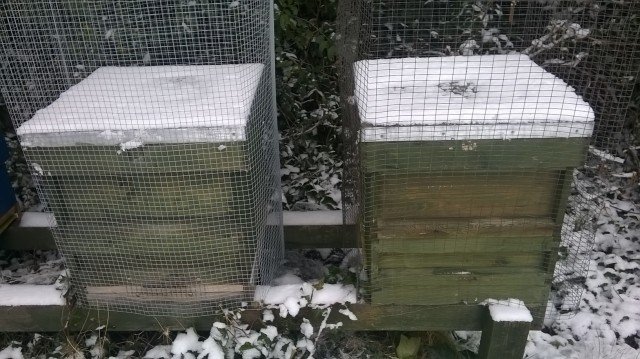
I like to visit apiaries occasionally during the winter to make sure colonies are ok as storms can cause damage with fallen trees etc. All colonies are ready for winter now with mouse guards, woodpecker netting and bricks on roofs. Weathermen consider December onwards as the start of winter so we have three months to go until spring arrives. It is important to heft colonies once in a while to see if they have much in the ways of stores. If a colony feels light it can be given fondant and the Association still has some Ambrosia fondant available. The fondant is priced at £15 per 12.5kg box with each box containing five individually wrapped 2.5kg blocks. Stockists are Philip Penman near Luton, Vicki Manners in Bedford and Neil Blakemore in Pavenham – see stockist details in the 2020 year book.
The Association has decided that members who wish to buy more than 5 packs of foundation next year will need to sell the equivalent weight in wax to the Association. So now is a good time to process that scrap wax that has accumulated over the season. Even collecting the scrapings from queen excluders, crown boards and super frames (top and bottom bars) can yield a reasonable amount of wax. The only place where wax is made is inside a beehive. So, in order to produce foundation, the equipment suppliers need to obtain the raw material – which comes from beekeepers! The Association holds several wax steamers which can be borrowed for free. When processing wax I place it in pieces of white garden fleece tied up into a bundle. The bundle is placed in the steamer and the wax comes out quite clean – good enough to trade in for foundation. See p36 of the 2020 Yearbook for members who hold steamers and other equipment.
Note that if you have unrendered wax it can be traded in without payment although it will count towards your extra foundation allowance.
As we approach xmas and the shortest day, I like treat for varroa with an oxalic acid type treatment. The books say there should be little or no brood around now although I have never inspected a colony to confirm this. Oxalic acid does not kill mites hiding in cells – only those on adult bees, hence the reason for applying it at around this time.
There are two ways of administering the acid – one by ‘trickling’ and the other by use of a vaporiser. Research shows that the vaporiser is a little more effective but requires specialist equipment, e.g. a car battery, face mask (the fumes are dangerous to humans and can damage lungs) and the actual vaporiser. So, I recommend applying it in the liquid form so as to avoid the possibility of acid damage. I have used the trickle method for many years and I have had good results in that time.
The Association does not hold any of the necessary protective equipment.
Some members have asked how should supers be stored to avoid wax moth. For many years I have kept them as follows:
- Place a couple of runners on the floor.
- Place a queen excluder on the runners (which will allow spiders to gain access to the super stack). The spiders should then deal with moths if they find their way into the stack.
- Make a stack with supers on the excluder, up to 12 for me as I can’t reach higher than that.
- Place a roof or a board on top of the stack to keep rodents out.
This method generally works well and I had only one year when a few supers were attacked by moths. It is also a chemical free system.
Lastly, seasons’ greetings to all and I hope to see many of you at the virtual AGM in February. With luck we will be able to meet up at some point in 2021 and even attend some outdoor events. Now that is something to look forward to!
Regards
Wally
October 2020 Apiary Notes
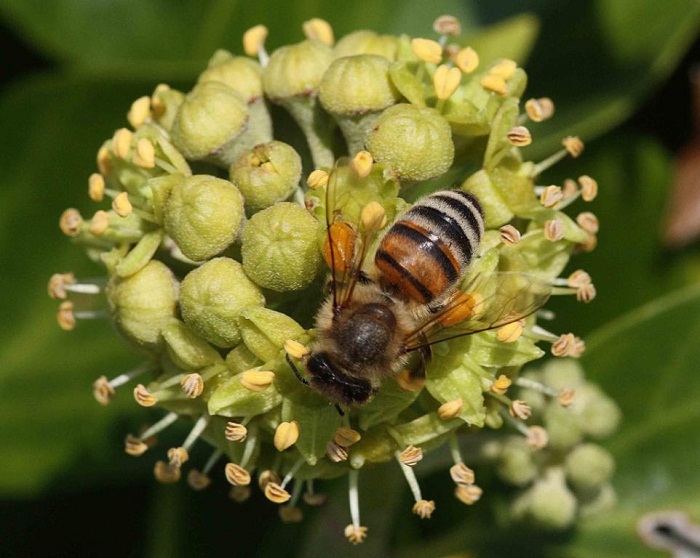
Now we are into October the weather has turned more autumnal although the bees are working the ivy during sunny spells. In fact some hives are working as if there is summer flow so they have a super to collect this last bout of activity. The presence of a super prevents the brood nest from becoming congested with stores and allows the queen to continue laying, albeit at a lesser rate.
Feeding should be about finished by now. Bees are reluctant to take stores down If the weather turns cold so, if some colonies need topping up it is better to do it sooner rather than later.
If your varroa treatment was Apistan or Apivar make sure the strips are removed after the treatment time – leaving them in all winter provides a lower level of dosage which can then lead to some mites developing resistance to the product. So to ensure these treatments remain effective for future years we need to take them from the hive soon.
The next job on my list before winter is to place mouseguards over entrances although I normally wait for the first frost before doing so. Mouseguards can knock off pollen loads from incoming foragers and pollen is vital for colonies while brood is being produced. Do tap the brood box before putting mouseguards in place – otherwise you could be trapping mice in the hive for winter!
The last job before winter is to wrap hives with wire netting to prevent woodpeckers damaging brood boxes. I am in the process of moving netting to apiary sites in readiness for this tedious job. If the winter is mild we can get away without nets but if there is a cold snap woodpeckers can do a lot of damage in a short time. Trying to put netting in place in bad weather is not high on my list ‘nice’ jobs so I prefer to do it in benign conditions. That way I know colonies are pretty safe until springtime.
Finally, just to let you know about the Facebook chat group set up by Steve Gale earlier in the year. This group is private, i.e. only available to Beds BKA members – the public cannot access it. You can apply to join the Chat Page group here.
This Facebook group is not run by the Association but by members. Anyone can post items of interest on there, for example ask a question about processing wax, anyone have some spare MAQS pads?, photos of what went well (or not). Topical items, e.g. I posted photos the other day of feed buckets washed in a Burco. Just a prompt to show what is happening around now.
One member posted recently that although he has been a member for over 30 years, as he lives on the edge of the county he does not often attend Association events. He said ‘I feel I am part of Beds BKA now that I can post items and see what others are saying’.
If you would like to join the group please contact Steve and, as long as you are a member, he will add you to the group.
Regards,
Wally
September 2020 Apiary Notes
Now we are approaching September we need to consider feeding our bees to ensure they have enough stores to last till next spring. Also varroa treatments should be complete by now or well under way. If Apistan or Apivar were used they should be removed after 6/8 weeks and that should be in this month. This is all part of preparing bees for winter.
Before I feed my colonies I like to check that each one looks viable. A quick inspection is made to ensure there is a laying queen and she has a good size nest. If the colony looks weaker compared to other colonies then it is worth considering uniting weak ones as long as there are no signs of disease. Chalk brood is very easy to identify whereas other brood diseases are less so. Any colony with bad chalk brood is culled this time of year as it is too late to rectify the situation. This is the last opportunity to inspect bees for six months so it is important they are in as good a state as possible.
Those colonies that look viable I feed as quickly as possible and I use Ambrosia. Syrup made from white granulated sugar is fine but it should be as strong a solution as possible, that is two parts sugar to one part water. Recently I have bought English tray feeders as the lids on contact feeders break down after a few years. Hopefully the tray feeders will last a lot longer.
If a colony was artificially swarmed earlier in the year check that all the frames with foundation have been drawn. If there are one or two frames undrawn by the walls bees sometimes leave these alone when being fed. Bring the frames into the edge of the nest which encourages bees to draw them when being fed. The sooner this is done the better as bees are less inclined to draw comb the further we move into autumn. If some frames are not drawn it means bees will not have enough space for the stores you intend to feed.
It is important to continuously feed a colony until it has enough stores; around 45lbs or 22kgs. If there is a break in feeding some of the stores will be turned into brood which means they will not have as many stores as you might think. But don’t overfeed as bees will fill cells where bees have emerged and thereby prevent the queen laying as many eggs she needs to produce the winter workforce. If feeding takes place too late in the year the outside temperature may be low and bees form a cluster. They don’t process syrup properly in these conditions and may leave the water content too high which can result with stores fermenting. This can cause dysentery in the hive and loss of bees.
When feeding bees all colonies in the apiary should be fed at the same time as bees become excited by the sudden input of food. If syrup is spilt or frames with honey are left open It can trigger robbing. An eke should be placed over the crown board around the feeder so the roof can be replaced. In fact I cover the feed holes with the feeder in order to prevent robbers gaining access through any gaps under the roof.
My aim is finish feeding by the end of September and hopefully before the ivy starts to flower. Some apiary sites have an abundant source of ivy in the autumn. Over the years I have found that bees that have collected a lot of ivy honey can have problems during winter, mainly with dysentery. So to avoid too much ivy being stored in the brood box I aim to finish feeding by end of September. A super is then returned to the hive for the bees to store any crop they may gather. The supers are then removed in November and any honey is dealt with then. Sometimes there is none at all and others there are several frames. It all depends on the weather conditions, ivy availability and strength of the colony. Some people really like the flavour but it is quite strong and is a ‘Marmite’ honey – you either like or you don’t!
Regards
Wally
August 2020 Apiary Notes
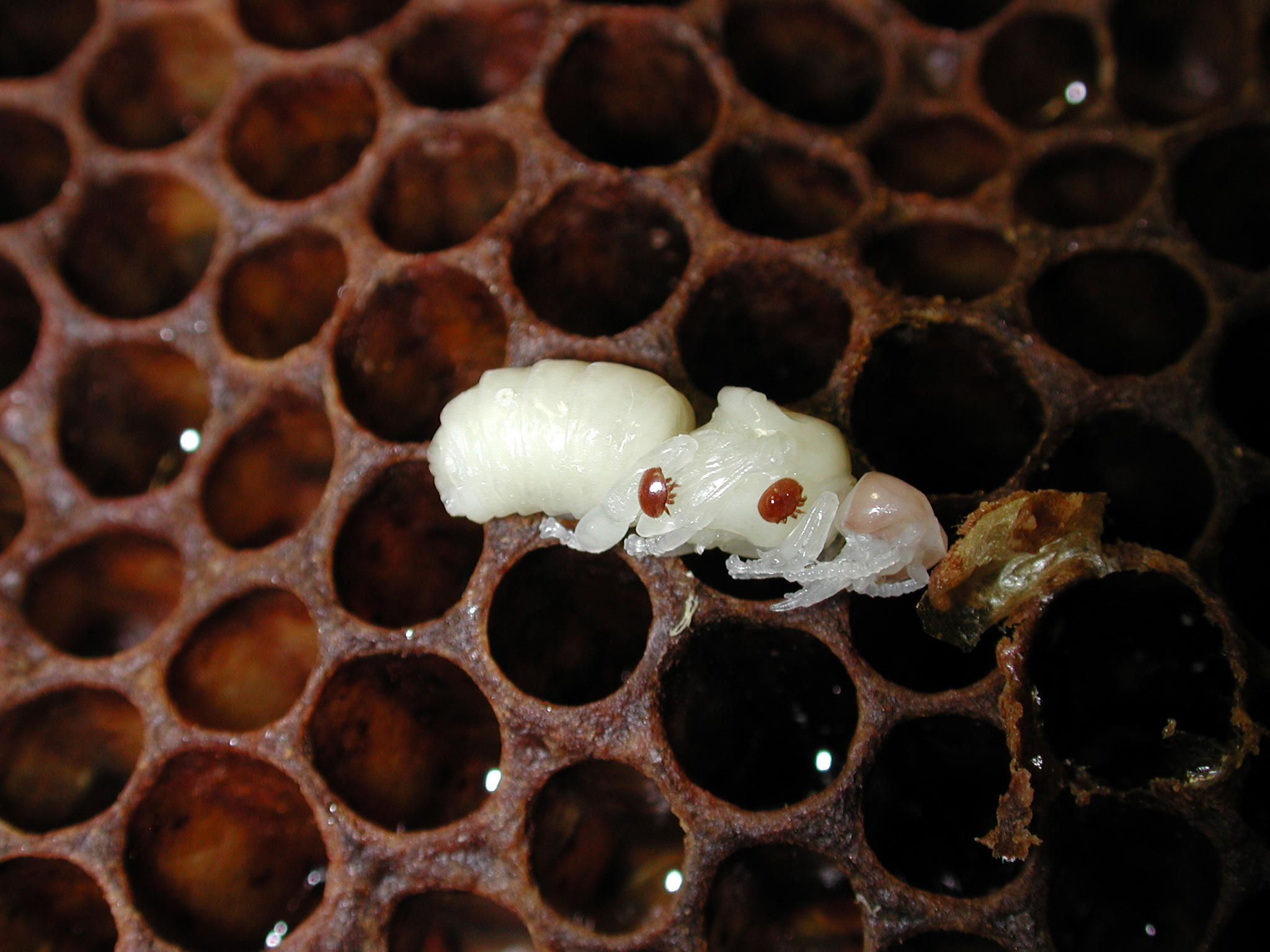
In my last apiary notes I mentioned that we need to consider our varroa treatment which should start as soon as honey is removed – ideally by early August. My opinion is that varroa levels should be as low as possible before the winter bees are produced. We need bees to be as healthy as possible to survive till the following spring. If mite levels are high they can impact many winter bees and shorthen their lifespan.
There are reports that there have been issues sourcing MAQS in the UK (i.e. in short supply, if available at all) although some suppliers seem to have it back in stock now. Consequently I have been asked to give my views on the various treatments available. Over the years I have used most of the available treatments and have formed a view on each of the products. Others may (will) disagree with what I have written but that is beekeeping. Put two beekeepers together and ask them about swarm control and you will get five answers. Put them together and ask about varroa treatment one would need to locate the exit quickly!
My policy when treating my bees for varroa is never to do it when honey is present. This way I know I cannot contaminate the honey regardless of what the instructions say. For some products the honey must be removed and some say it is ok to treat with it present. I prefer to take supers away and then I know I am completely safe.
Most varroa treatments are harsh and make life for bees unpleasant. The aim of treatments is to be strong enough to kill mites but not the bees. But without treatment most colonies will die out. This statement can open a can of worms so I’ll leave it at that.
MAQS – formic acid is the active substance and you can tell as soon as the lid is removed from the container even when the pads are still in their wrapping. The smell is very strong and I wouldn’t want to be exposed to the substance for any period of time. Many people find it very effective and the treatment is over in 7 days. There are reports of it killing queens if there is not enough ventilation. Recently I heard of someone who lost a lot of bees as well as the queen when treating with MAQS – so be very careful and follow the instructions closely.
Apiguard – contains thymol in two trays and takes four weeks to treat (two weeks per tray). This product is temperature sensitive so must be used in August whilst we have good daytime warmth. My view is that it can have variable effectiveness and can also put the queen off lay at a time when I feel she should be producing the winter bees. Read the instructions carefully as mesh floors must be blanked off and ventilation restricted.
Apivar – the active ingredient is Amitraz. The treatment time is six to ten weeks using two strips per hive and is very effective. However, if the product is used each year mites can develop resistance and then it will become unusable. This happened years ago with Apistan when the mites developed resistance. So varroa treatments should be changed each year to prevent mites developing resistance.
Apistan / Bayvarol – these are similar products. Apistan contains fluvalinate and Bayvarol flumethrin. The treatment is the same as Apivar – two strips per hive for a minimum of six weeks. All treatments using strips should be removed before winter as they become weaker over time. This means that mites then can then tolerate the weaker dosage and develop resistance in this way.
Oxalic Acid – Treatment can be either by trickling or vaporisation; both are effective although vaporisation is reported to be more effective. Vaporisation requires a car battery and a hot plate plus a breathing mask as oxalic fumes are dangerous to humans. For trickling there are 3 approved products (Api-Bioxal, Oxybee and Oxuvar). I have only used the trickle method and found it to be very effective.
My current regime is a mixture of oxalic acid trickling in winter and spraying Varroamed in March / April and August. Varroamed replaces Hiveclean which was removed from the market some years ago as it wasn’t approved by the VMD (Veterinary Medicines Directorate). It has now been approved and has doubled in price as a result. This product does not kill mites but causes them to fall off the bee as they do not like the taste. So it is essential to use open mesh floors without the insert so the mites fall on the ground. The aim of my regime is to prevent mite levels becoming too high where they can cause damage to the brood – hence the different treatments during the year. The product is sprayed onto the top of brood bars. It has little impact on the bees (it does contain oxalic acid but much weaker than the winter treatment). As mentioned this is applied twice during the active season – once before supers are added and again when they are removed. Oxalic acid is then trickled between seams of bees just before xmas. Oxalic acid in winter can be used only once as it affects the gut of bees. As I mentioned earlier most treatments are harsh on bees but this regime seems to me to be the least harmful.
You may want to place the plastic insert under the floor (if the product you are using does not require the floor to be ventilated) to monitor mite drop. There can be wide variations between colonies in their mite knock down which often comes as a surprise. Personally I do not use inserts as my floors are homemade and do not take an insert. However, I regularly remove drone pupae during the main part of the season and look for mites on the developing drones. This normally gives a good indication if there is a mite problem or not. Another thing to look for are bees with deformed wings (DWV) which can indicate that there is a mite issue if many bees are affected.
There are other products on the market but I have not tried them so I have not mentioned them in these Notes. My aim here is to give an appreciation of the popular products and issues there may be in their use. But do treat with something otherwise your bees may not survive till next spring.
Regards,
Wally
July 2020 Apiary Notes
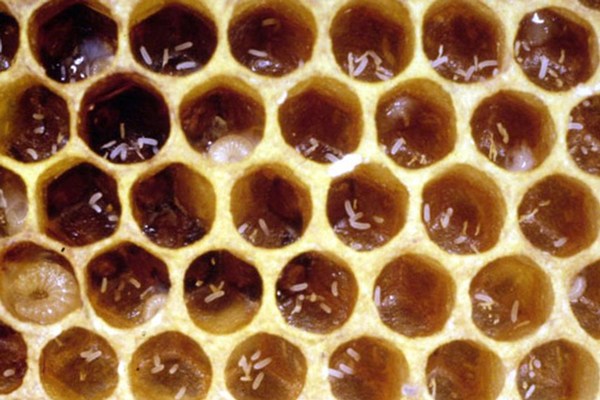
As we move into July we are nearing the end of the beekeeping season as regards to honey flows. There are still many tasks to come for winter preparation but that is for another day.
Swarming tends to reduce significantly when the days no longer lengthen so less attention is needed for swarm inspections. However, those colonies that were artificially swarmed or swarmed before they could be split must be checked for a laying queen. Large colonies can take up to 3 or 4 weeks before a new queen comes into lay after she emerges. So a colony may appear to be queenless but is just waiting for the new queen to start laying. A simple test is to add a frame of eggs from another colony and look at the frame a few days later. It is a good idea to place a pin in this frame in order to identify it when checking for queen cells. Move other frames away from the test frame in case any queen cells that may be present are not damaged when removing the test frame from the brood box. If no queen cells have been drawn a queen is present and should come into lay soon. If queen cells have been produced select one where a grub is visible in a good position on the comb and destroy all the others. Leave the colony for 3 to 4 weeks and then check for eggs.
Recently I inspected a colony which had several frames of brood only to discover drones were present in worker cells. The sealed brood had domed cappings rather than a flat surface that is typical of worker brood. There were also several eggs per cell which is another indication of a laying worker. Note that new queens sometimes lay two eggs in some cells but practice eventually resolves this issue. Colonies with laying workers cannot be recovered so the only option was to take the brood box a little distance away and shake the bees off the comb and remove the hive from the apiary. Hopefully the worker that was laying would not be able to fly back to the original location and the remaining workers would find a home in neighbouring colonies. The brood frames were destroyed as they were potential varroa producers.
Another potential issue is frames of foundation in colonies that were artificially swarmed earlier in the season. When making up the artificial swarm brood box it is good practice to add frames of foundation in the box where the old queen is placed in. When making up an artificial swarm I like to give the old queen a frame of sealed brood (so the queen has young bees available to produce royal jelly), two or three drawn frames (so the queen can continue laying), and a frame of stores. So there could be 5 to 7 frames of foundation in the box with the old queen. Bees are sometimes reluctant to draw these frames especially the outside ones. For these colonies move a frame of foundation into the brood nest every 7 to 10 days. This forces bees to draw these frames as the nest has been split. My preference is to move one or two frames at a time into the nest to ensure these frames are drawn before the end of summer. During autumn feeding bees quite often ignore these blank frames meaning a colony could go into winter underweight because not all the frames are drawn.
The recent hot weather plus the June gap has significantly reduced the honey flow. But there are still a few weeks to go for bees to forage on blackberry etc. So make sure bees have enough super space in case of a late flow. If there is a good soaking in the coming days plants will start nectar production again and bees are opportunists – ready to take advantage of whatever is available to them.
Now is a good time to consider which varroa treatment to use in the coming weeks. My approach is to treat when no honey is on the hive so the intention is to remove honey from the hives by mid August in order that treatment can start. There is plenty of advice on Beebase on the different products available and attached is a pdf (varroa-pdf-2020) from Beebase showing the various products.
Last but not least – wasps. They can become a problem from July onwards and often target weak or diseased colonies and nucs especially. As we move through July it is a good idea to reduce the colony entrance to around an inch or so to make it easier for bees to defend. If wasps are in robbing mode on a colony it is difficult to stop. Definitely a case of prevention better than cure. Final thought, place wasp traps around the apiary to reduce wasp numbers. Traps can easily be made from jars with some small holes in the lid, spoon of jam and half fill with water. The wasps eventually drown but bees are not attracted to the mixture.
Regards
Wally