Author: content_editorial

October Apiary Notes

Now we are into October the weather has turned more autumnal although the bees are working the ivy during sunny spells. In fact some hives are working as if there is summer flow so they have a super to collect this last bout of activity. The presence of a super prevents the brood nest from becoming congested with stores and allows the queen to continue laying, albeit at a lesser rate.

Feeding should be about finished by now. Bees are reluctant to take stores down If the weather turns cold so, if some colonies need topping up it is better to do it sooner rather than later.

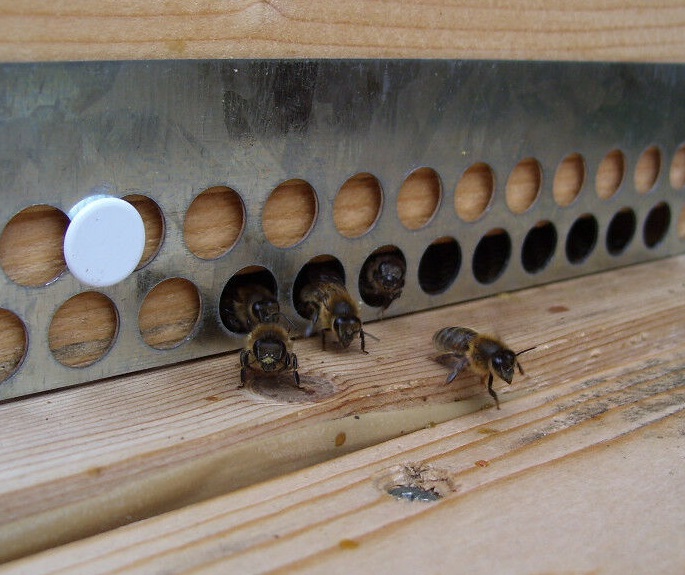
The next job on my list before winter is to place mouseguards over entrances although I normally wait for the first frost before doing so. Mouseguards can knock off pollen loads from incoming foragers and pollen is vital for colonies while brood is being produced. Do tap the brood box before putting mouseguards in place – otherwise you could be trapping mice in the hive for winter!

The last job before winter is to wrap hives with wire netting to prevent woodpeckers damaging brood boxes. I am in the process of moving netting to apiary sites in readiness for this tedious job. If the winter is mild we can get away without nets but if there is a cold snap woodpeckers can do a lot of damage in a short time. Trying to put netting in place in bad weather is not high on my list ‘nice’ jobs so I prefer to do it in benign conditions. That way I know colonies are pretty safe until springtime.

As the active bee season is now over I will send out apiary notes every couple of months until spring. Meanwhile, do try to get along to Improver sessions that are held are the county. They are a great way to acquire beekeeping knowledge over the winter in readiness for next the season. (See page 37 of the Yearbook for Improver group leaders.)

Wally Thrale

September Apiary Notes

Our bees are now preparing for winter and it is time for us to make sure colonies are in a good condition to survive the winter.

My hives were all treated for varroa during August and this year I used Apivar. It is important to vary the type of treatment applied each year so that the risk of mite resistance is reduced. If you haven’t treated yet choose a treatment that isn’t temperature dependent. Apiguard is less effective in lower temperatures and can leave many mites in the colony at a time the winter bees are produced.

This coming week I shall finish moving colonies to their winter quarters from sites where they have foraged this summer. One of my main aims over winter is to provide as much shelter for colonies from all winds even if it means placing tens of colonies in one site. However, there must be enough pollen resource for such a site but nectar is less of an issue as the bees will be fed over the coming month. In my experience winter losses are reduced if shelter is provided. Weather presenters tell us of the ‘wind chill factor’ and this applies to bee colonies as well as humans!

Over the coming weeks I shall feed my bees Ambrosia as I find this an easy way to feed bees. It is an inverted sugar so there is less work for the bees when processing it. My aim is to finish feeding by the end of September and preferably before ivy comes into flower. Ivy honey can cause issues for bees if they have too much. It is associated with dysentery and can weaken a colony or cause it to die out. So when a colony has been fed enough syrup I place a super back on the hive to collect any ivy honey the bees may bring in. It is conventional super placing, i.e. brood box, queen excluder, super and then crown board. The super can be removed around mid November and processed but the honey will probably have set at this point. The reason I add the super is to allow space in the brood nest for the queen to lay. If bees bring in too much ivy it could take up too much nest space and thereby reduce egg laying .

If you added several frames of foundation to the brood box earlier in the season check if the bees have drawn them out fully.  It may be necessary to move outside frames inwards by one otherwise the bees may not utilise the outside frames for stores. This means they have less food for winter and could starve next spring.

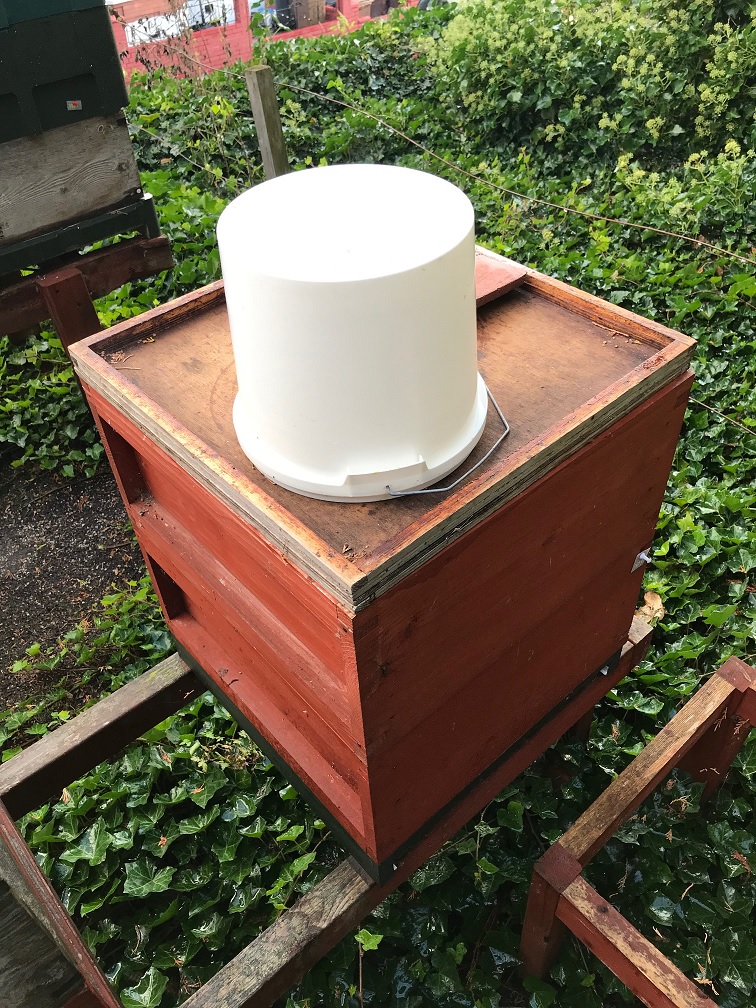
When feeding with granulated sugar it should be a strong solution, that is 2lbs of sugar to a pint of water. Only use white granulated sugar as other forms are harmful to bees. An easy way to dissolve sugar in bulk is to use a paint stirrer attached to a power drill. Place around 20lbs of sugar in a 5 gallon container and add hot tap water to cover the sugar. Stir with the drill for a minute or two and the sugar will have dissolved sufficiently. When I used granulated sugar in the past I was able to process around 100lbs in about an hour.

Finally, assess colonies and ensure they are queen right and look strong enough to make it through winter. It may be better to unite two weak colonies in the hope that a single one will survive rather than two weak ones die out.

Wally Thrale

Swarming Season

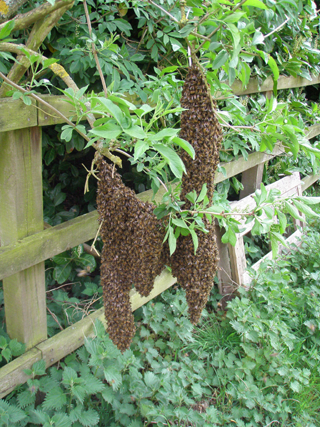
It’s that time of year again when we can expect to see honey bee swarms. Hives are beginning to get stronger and may soon decide to swarm. We have already seen some swarming and the recent warm spell of weather will contribute to this tendency.

If you are a member of the public and suspect you have a honey bee swarm our volunteer swarm collectors may be able to help. See our pages on insect identification and swarm collectors for assistance.

Food for thought ?

Bees on Compost

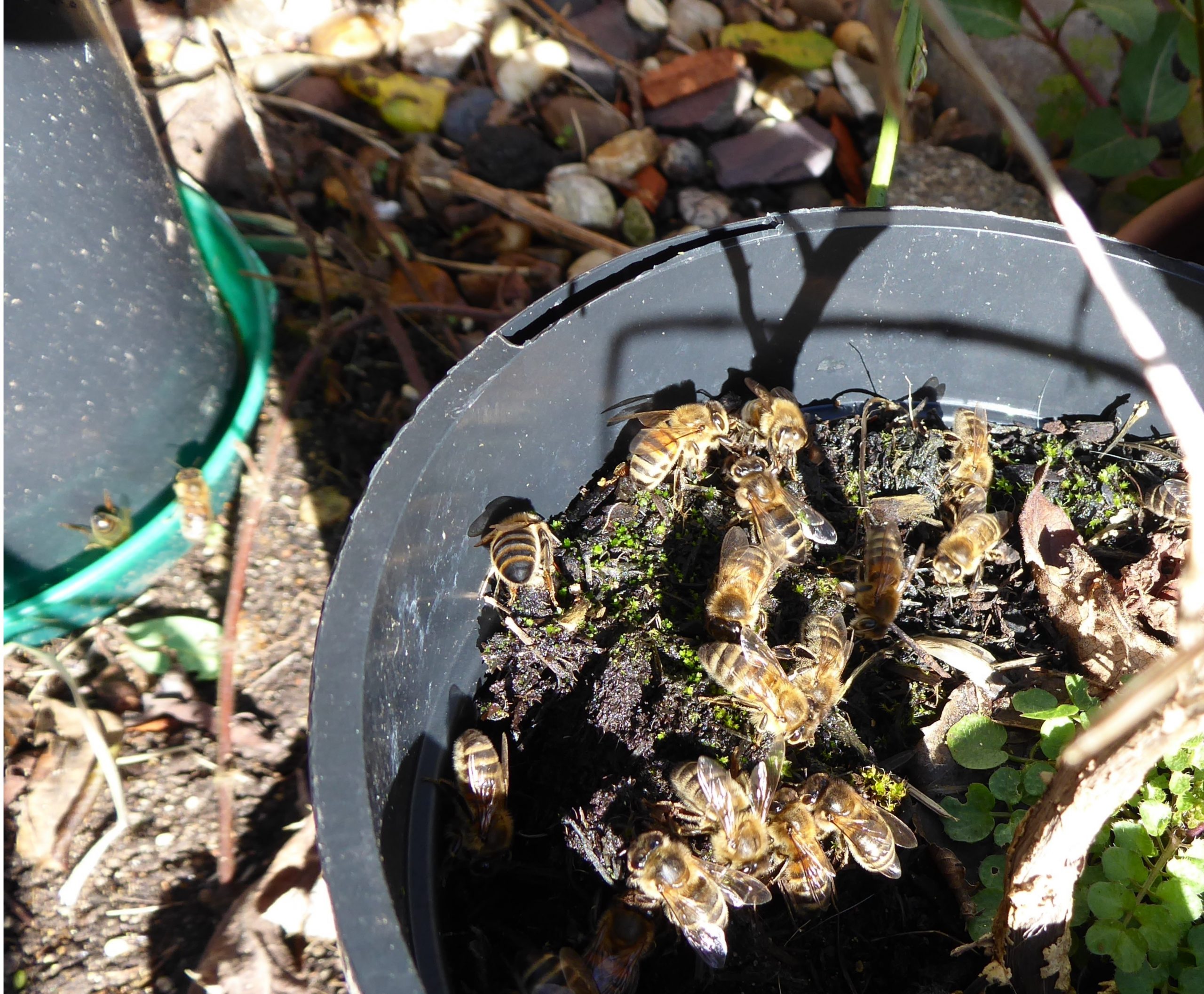
The bees in my garden have completely ignored the large patch of Snowdrops planted especially for them.  However, they have adored the pots used for growing tomatoes last year, with leftover but “spent” organic compost.  I have seen this kind of behaviour before, but never to this extent or so persistently.  What are they after?  Mineral nutrients?  Something else too?  Mycologist Paul Stamets argues that in forest conditions bees might also derive essential benefits from fungi, and mushrooms can preserve them from virus infections – and save the world.  Google if you are interested!

Colin Hall

2019 Beekeeping Courses Announced

Bedfordshire Beekeepers are pleased to announce details of our 2019 beginners courses.

Course:                 An Introduction to Beekeeping

Suitable for:        Complete beginners and new beekeepers.

Cost:                      £60 for the whole season.

Two locations:   Luton or Bedford

Luton

Theory sessions indoors at Stockwood Park Discovery Centre, for six Sunday mornings, starting 3rd March 2019, 10:30 to 12:30.

Followed by practical sessions outdoors at Stockwood Park Training Apiary every Sunday morning April to September.

Bedford

Theory sessions indoors at Moggerhanger Village Hall, six Tuesday evenings, starting 5th March 2019, 19.30 to 22:00.

Followed by practical sessions outdoors at Priory Country Park Training Apiary every Sunday morning April to September.

More details can be found in our Events listing

To book a place go to our booking page

To find out more about beekeeping have a look at our Is beekeeping for you? page

Schools Art Competition

Bedfordshire Schools Art Competition 2018

Bedfordshire Beekeepers Association has an ambition to increase interest, particularly of young people, in the craft of beekeeping. Therefore, they are inviting schools in Bedfordshire to take part in a bee-themed art competition which will encourage children to learn about bees.  Schools should register to take part by the end of June 2018, so if you have not already heard about this via your school, please download a copy of the rules from the Bedfordshire Beekeepers website (www.bedsbka.org.uk) There will be two classes:

Competition Class 1:  Day in the Life of a Bee

For Key stage 2 and 3 students (maximum size A3):

Students should work either individually or collaboratively to create an illustration that shows the ‘Day in the Life of a Bee’. Students should investigate the busy life of a bee and how they visit flowers to collect pollen and nectar before carrying it back to the hive and turning the nectar into honey. Students can work in whichever media is most appropriate.

Competition Class 2: Bee Apocalypse

For Key stage 4 students (maximum size equivalent to A3 to be displayed either vertically (on a poster board) or horizontally (on a table):

‘Bee Apocalypse’. Bees are a vital part of our community. Investigate why bees are important and then create a final piece that communicates the significance of bees and the potential consequences of the loss of this valuable species to the human race. Students can use any media; painting, drawing, photography, sculpture, printmaking, textiles are all welcome!

Schools can decide how they are going to select the artworks to represent them. These will be judged by a panel and the 10 finalists from each of the competition classes will be displayed at a Honey Festival to be held at Woburn Abbey Gardens on 22nd September 2018. The winners will be decided by public votes from visitors to the festival and will be announced on the day.

Every year the Association holds an annual honey show, with exhibits of the best honey, hive products (such as beeswax and candles) and crafts (including cookery using honey) from around the County. This year the show will be held at Woburn Abbey Gardens on 22nd September 2018. In addition to the show Beds BKA will be organising a honey festival where there will be a chance to talk to beekeepers, see equipment, attend talks, view a microscopy display, taste honey and see an observation hive.

Beautiful but Dangerous!

As pictured at Queen Bee Day: Beautiful but Dangerous!

One queen has lived in Gill Brewer’s memory since 2009!  Her daughters stung her apiary landlord and his dog.  She culled the whole hive because the extreme aggressive-defensive behaviour might have been passed on to other colonies through the drones.

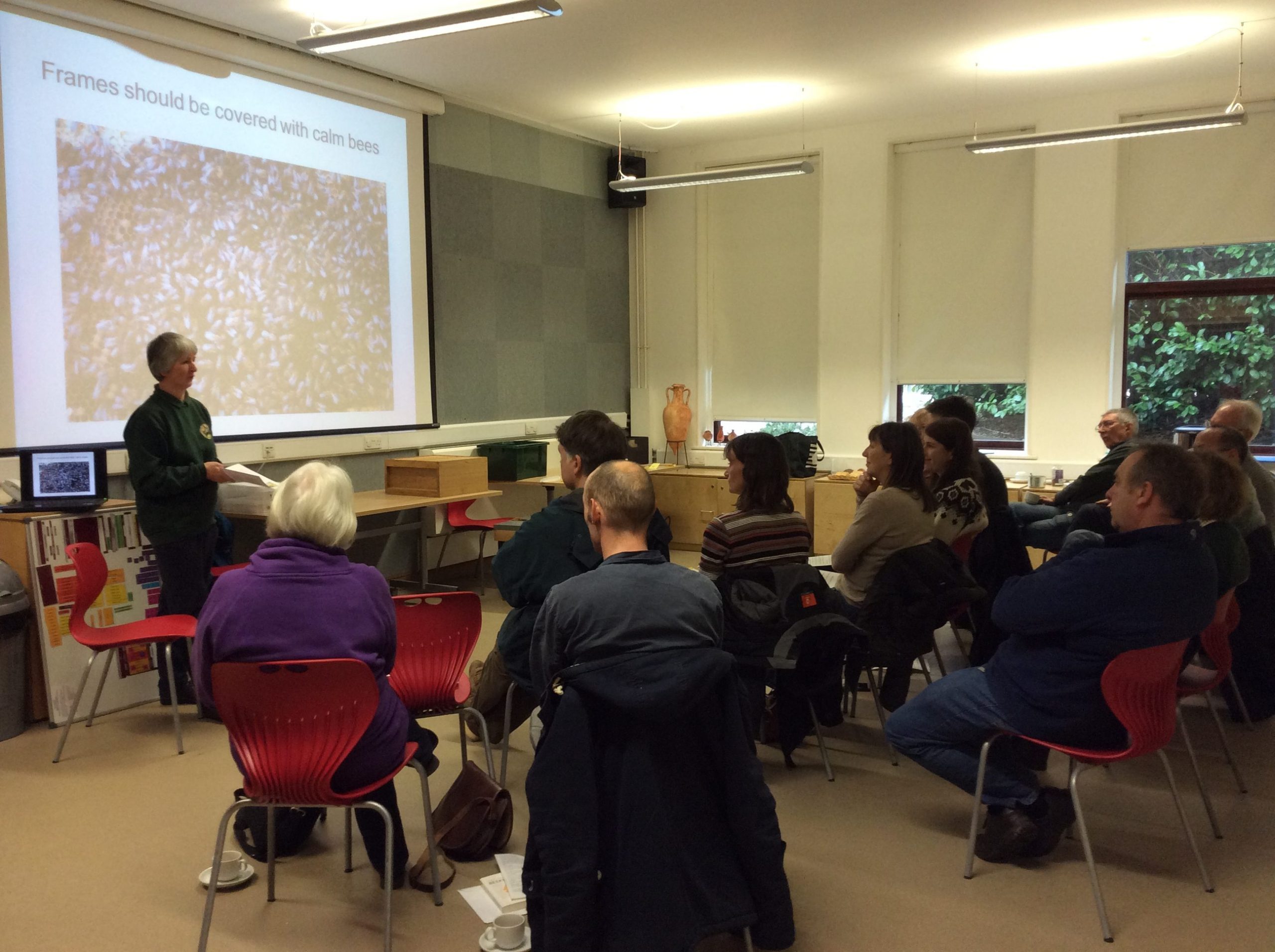
Our training day on ‘The Queen Bee’ at Flitwick Village Hall dealt with many fundamental issues of real practical importance, attracting 48 participants. Among the matters covered were just how the female egg becomes a fully-fledged queen, pros and cons of different strains of bee, different queen rearing methods and whether to buy in professionally produced queens – or raise our own “British Mongrels”, with a clear majority perhaps leaning towards this approach.

We were privileged to have Peter Tompkins as one of our teachers, who gave us with insights into pioneering bee research at Rothamsted as well as the benefit of his huge fund of know-how about working successfully with bees.

Nosema Clinic

The Association is pleased to announce  that John Rhodes will be running a Nosema Clinic on 10 March. Please see event listing for more details Nosema Clinic.

Beekeeping Courses for 2018 Announced

Introduction to Beekeeping Courses for 2018

The Luton course starts indoors on Sunday mornings from 18th February to 25th March at the Discovery Centre, Stockwood Park from 10.30am til 12.30pm. Then continues every Sunday morning outdoors at our Stockwood Training Apiary throughout the spring and summer.

The Bedford course starts indoors on Tuesday evenings from 13th February until 20th March at Moggerhanger village Hall from 7.30pm to 10pm. Then continues every Sunday morning outdoors at our Priory Park Training Apiary throughout the spring and summer.

The cost of the course is £60 per person. This covers the theory and practical sessions for the whole season. You are strongly encouraged to attend both theory and practical sessions. Initially bee-suits can be borrowed for practical training. It is important to gain experience in handling bees, learn what to look for when inspecting a colony and see how a colony changes during the season before embarking on beekeeping yourself.
If you wish to enrol, please visit our online booking system at : https://webcollect.org.uk/bedsbka


Honey Show – Honey Festival

Woburn Abbey courtyard and gardens provided a beautiful setting for a new event in our calendar, the Honey Festival on Saturday 30 September.  A wide range of stalls were there to appeal to visiting members of the public, including the ever-popular observation have, skep-making with Ray Smith, and a much-frequented display of local honeys and other edibles for tasting and purchase.  Many members of the Association ran the stalls or helped to talk to the 450 or so visitors, who also had full access to the Honey Show inside.

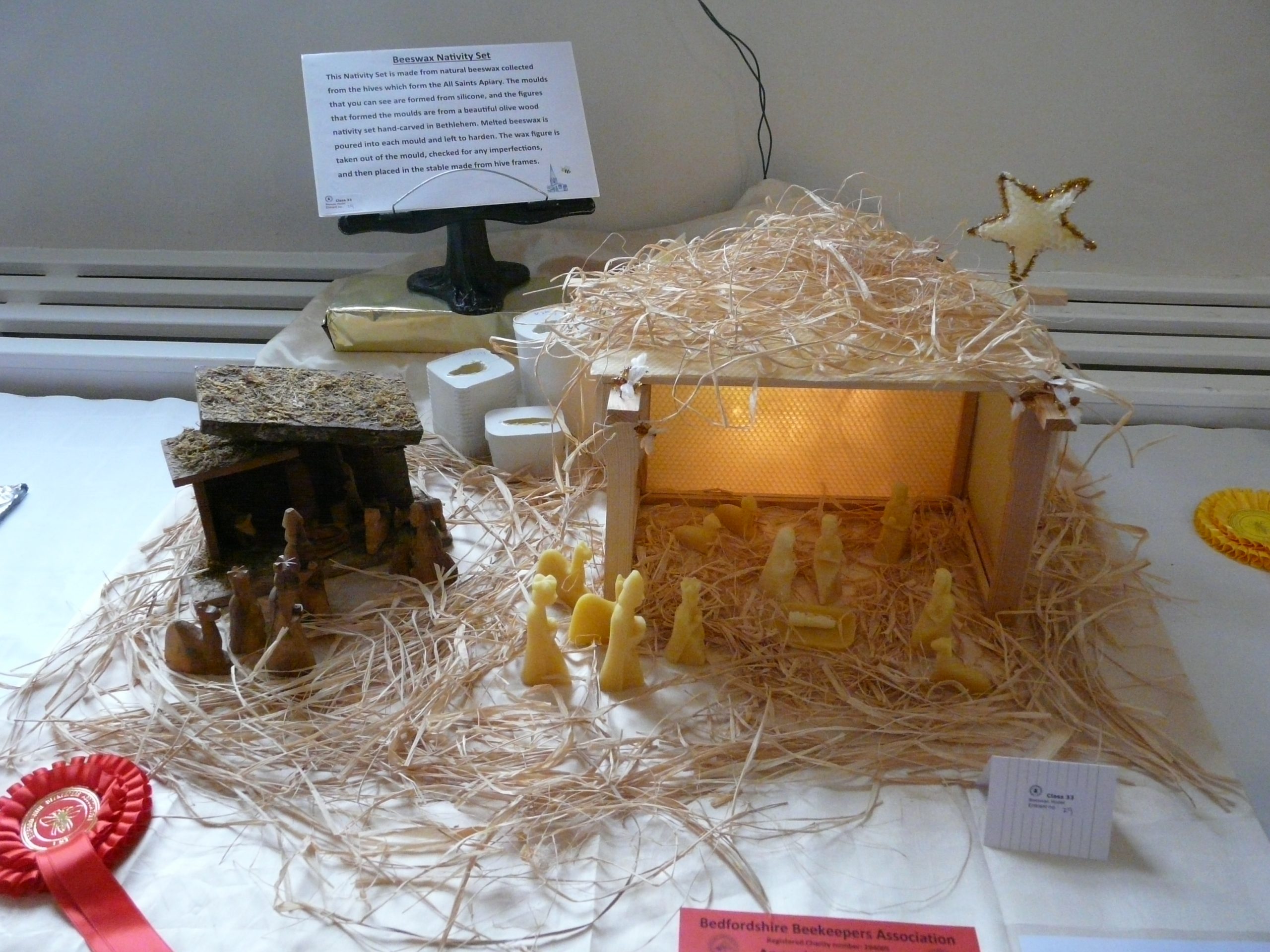
Around 10% of members entered for the Show this year, with over 250 items.  The judges praised the excellent organisation and overall quality of the entries.  One of the many eye-catching and prize-winning items was a nativity scene ingeniously constructed from beekeeping materials, with figures cast in beeswax from a church apiary, using moulds specially made from models hand-carved in Bethlehem.

Show Secretary Fiona Cook commented: “Woburn Abbey was very happy to have hosted Beds BKA, and we were delighted to be there.  The very friendly, positive atmosphere has received much comment.  It seemed to come about from a combination of the welcoming and very professional staff at Woburn and our own ethos and teamwork as a charity, with so many willing helpers.”

Another ingredient may have been the real interest and willingness to engage with bees and beekeeping on the part of visitors: the public attitude has really changed in a very positive direction.

We hope to return to Woburn next year, perhaps in early September in the hope of warmer weather, and on a Sunday, perhaps with other rural crafts represented.